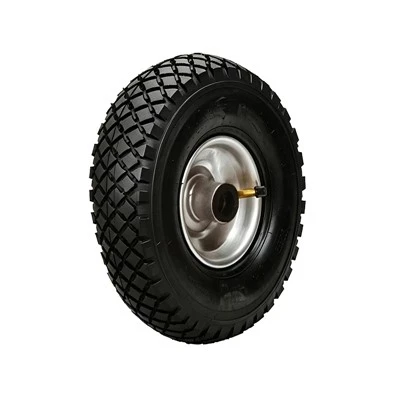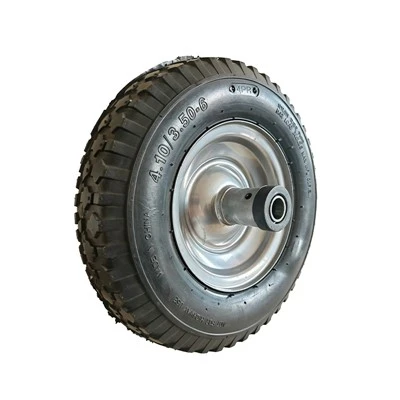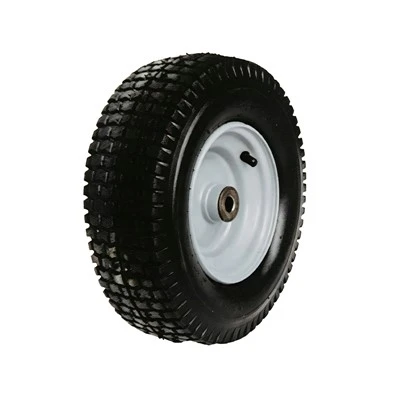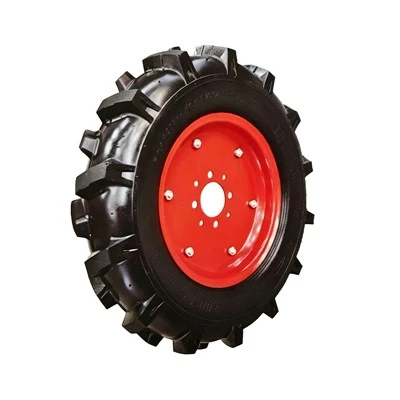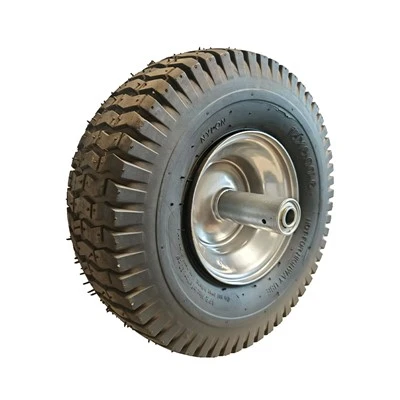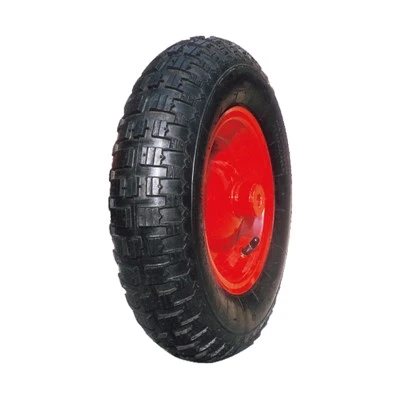

Wheels are essential components of hand trucks, platform carts, utility trolleys, and industrial material handling equipment. Pneumatic wheels use air-filled rubber tires to provide flexible support and cushioning. Compared with rigid wheel designs, they offer distinct advantages in shock absorption, vibration reduction, and adaptability to uneven surfaces. These characteristics make pneumatic wheels suitable for warehouses, construction sites, agricultural applications, and a variety of outdoor handling environments.
One of the primary functions of a pneumatic wheel is load support and weight distribution. During material transportation, the wheels carry the combined weight of the equipment and its load while transferring that weight to the ground. Choosing the correct tire size and load rating is important for maintaining stability and preventing premature wear caused by excessive loading. Wheel specifications should therefore be selected according to the equipment's own weight, maximum working load, and expected frequency of use.
Shock absorption and cushioning are among the key advantages of pneumatic wheels. The air inside the tire provides a flexible cushion that allows the tire to deform when it encounters uneven ground, small obstacles, surface joints, or rough terrain. This helps absorb part of the impact and reduce vibration transmitted to the equipment. As a result, pneumatic wheels can contribute to smoother transportation and help protect loads from excessive movement during operation.
Another important function is adaptation to different ground conditions. The flexible rubber tire can conform to the surface more effectively than many rigid wheel designs, maintaining useful ground contact on gravel, rough concrete, and certain unpaved surfaces. This makes pneumatic wheels a practical choice for hand trucks and industrial carts that operate across both indoor and outdoor areas or in demanding environments such as construction sites.
Pneumatic wheels can also improve handling comfort and overall mobility. Proper selection of wheel diameter, tread design, and tire pressure can help balance load capacity with rolling performance. When these factors are matched to the application, operators can move equipment more smoothly while maintaining reliable control.
Overall, pneumatic wheels combine load support, cushioning, shock absorption, and ground adaptability in a single wheel design. Selecting the appropriate pneumatic wheel based on load requirements, operating conditions, and usage frequency can improve the stability and efficiency of material handling equipment while providing a more flexible mobility solution for a wide range of applications.