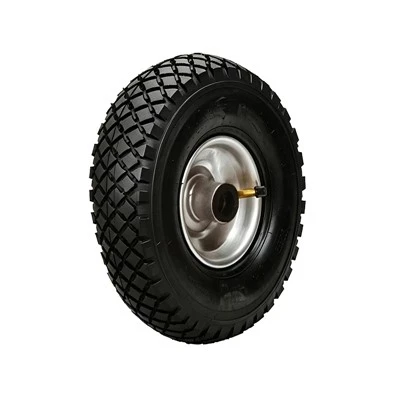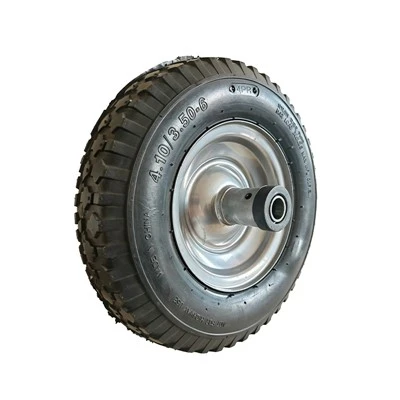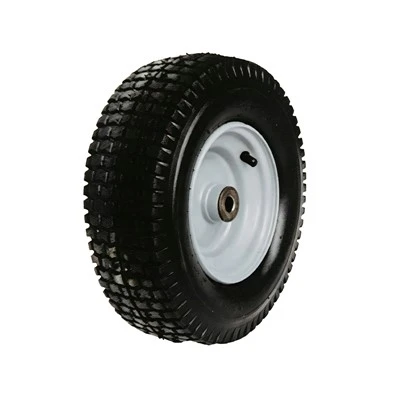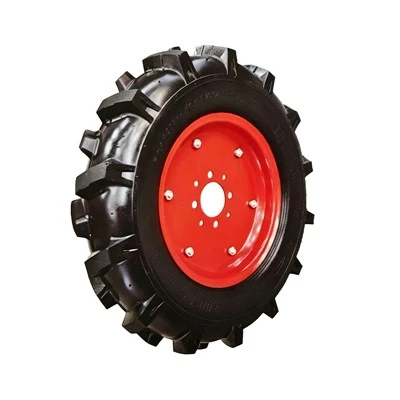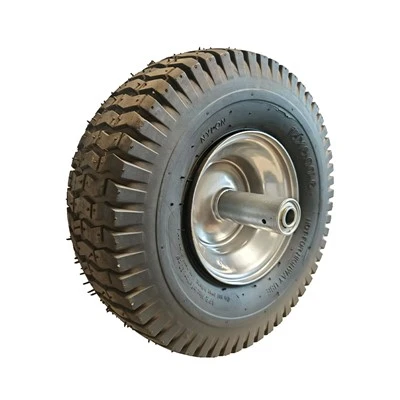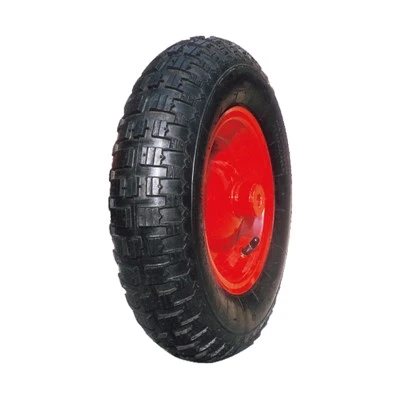

Pneumatic wheels are essential components of hand trucks, platform carts, industrial trolleys, and other material handling equipment. Their quality and technical performance have a direct impact on load capacity, mobility, stability, and service life. As material handling applications place increasing demands on safety and reliability, pneumatic wheels must meet well-defined requirements covering materials, dimensions, construction, and functional performance.
Tire material is fundamental to overall wheel performance. A pneumatic tire should provide a suitable combination of elasticity, wear resistance, impact resistance, and environmental durability. Depending on the application, the tire may also need to withstand temperature changes, repeated friction, and external impacts. An appropriate rubber compound and tread design can help maintain consistent traction and rolling performance throughout regular operation.
Load capacity is another critical technical requirement. The pneumatic wheel must be properly sized according to the equipment's own weight and maximum working load. The design should account not only for static loading but also for dynamic forces and impacts that occur when the equipment is moving. For industrial carts and heavy-duty hand trucks, wheels with sufficient structural strength and an appropriate load rating are essential for reliable long-term operation.
Air retention and pressure stability are equally important. A pneumatic wheel relies on internal air pressure to provide flexible support and cushioning. Any leakage from the tire or inner tube can cause pressure loss, which may affect load capacity, rolling resistance, handling, and shock absorption. The tire and wheel assembly should therefore provide reliable sealing, while air retention should be checked during quality control and routine maintenance.
Dimensional accuracy and component compatibility also influence wheel performance. Tire diameter, tire width, wheel-center dimensions, and axle-hole specifications should comply with the required design tolerances. Accurate dimensions ensure proper installation and smooth rotation. Excessive dimensional variation can lead to installation problems, instability, or uneven wheel movement.
The bearing assembly must also provide reliable rotation and adequate load support. For equipment that is frequently operated, bearing durability, smooth rotation, and compatibility with the wheel center and axleful manufacturing processes and effective quality control help ensure that pneumatic wheels maintain reliable performance under different operating conditions, providing safer, smoother, and more efficient mobility are important factors in maintaining consistent performance.
Overall, the technical requirements for pneumatic wheels cover material performance, load capacity, air retention, dimensional accuracy, structural strength, and rotational performance. Careful manufacturing processes and effective quality control help ensure that pneumatic wheels maintain reliable performance under different operating conditions, providing safer, smoother, and more efficient mobility for material handling equipment.