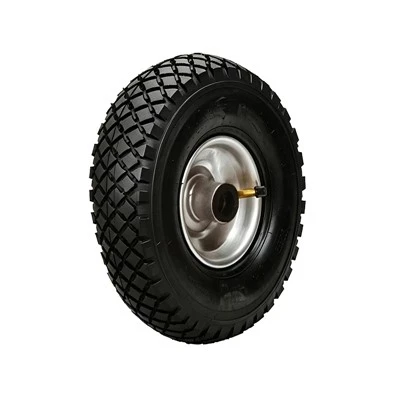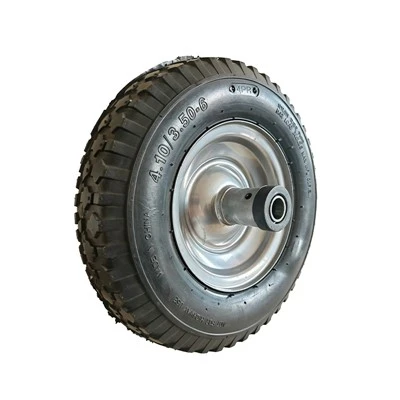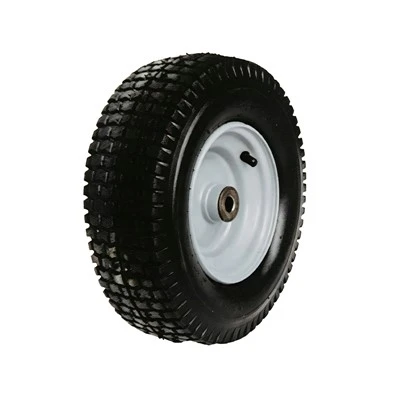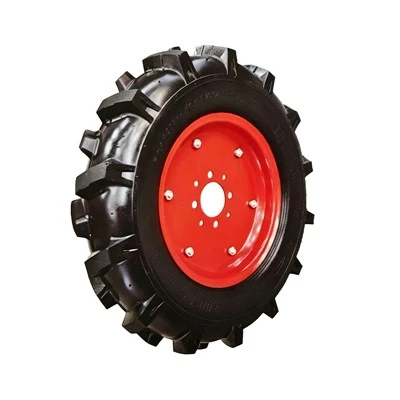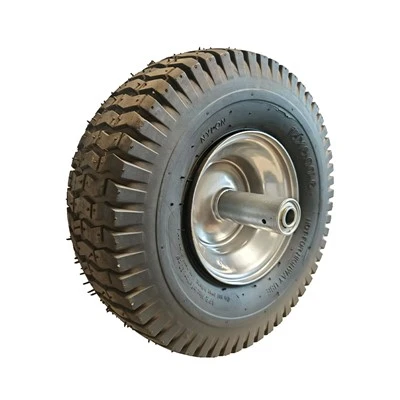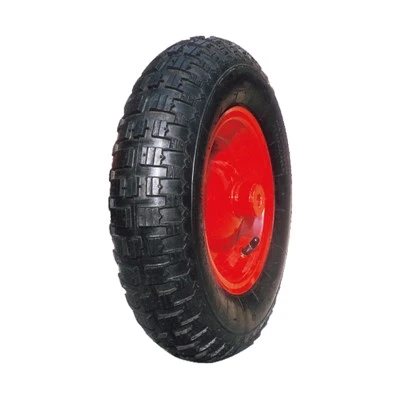

Pneumatic wheels are widely used on hand trucks, platform carts, utility trolleys, and industrial material handling equipment. Unlike solid wheels, pneumatic wheels use compressed air to provide flexible support, giving them effective cushioning and shock absorption while carrying loads. A typical pneumatic wheel consists of a rubber tire, an inner tube or sealed air chamber, a wheel center, and a bearing assembly. Each component contributes to the wheel's overall load capacity, stability, mobility, and service life.
The rubber tire forms the primary outer structure of a pneumatic wheel. It is the component that comes into direct contact with the ground and must withstand the weight of the equipment and its load. At the same time, the tire needs to provide a suitable balance of wear resistance, impact resistance, flexibility, and traction. Tread patterns and rubber compounds can affect how the wheel performs on different surfaces. For equipment frequently used outdoors or on demanding terrain, a tire with good durability and reliable traction can be particularly beneficial.
The air chamber is one of the defining features of a pneumatic wheel. Compressed air provides elasticity and allows the tire to deform when it encounters uneven surfaces. As the wheel passes over bumps, joints, gravel, or rough concrete, part of the impact can be absorbed through the compression and recovery of the tire. This cushioning effect helps reduce vibration transferred to the equipment and can contribute to smoother operation on irregular ground.
The wheel center provides the connection between the tire and the equipment. Depending on the application, wheel centers may be manufactured from materials such as steel or aluminum alloy. Industrial material handling equipment generally places greater emphasis on structural strength and durability, making proper wheel-center selection important for applications involving heavier loads and frequent use.
The bearing assembly is another essential part of the wheel structure. Positioned at the center of the wheel, the bearing works with the axle to support rotation and influence rolling efficiency. A suitable bearing configuration can reduce rolling resistance and improve maneuverability, particularly on hand trucks and platform carts that are moved frequently throughout the working day.
Overall, pneumatic wheels combine a flexible tire structure with an air-filled cushioning system, a load-supporting wheel center, and a rotating bearing assembly. This combination gives them strong shock-absorbing properties, good adaptability to uneven surfaces, and practical mobility for a wide range of material handling applications. By selecting the appropriate tire, air chamber, wheel center, and bearing configuration, manufacturers and users can optimize pneumatic wheels for specific load requirements and operating conditions.