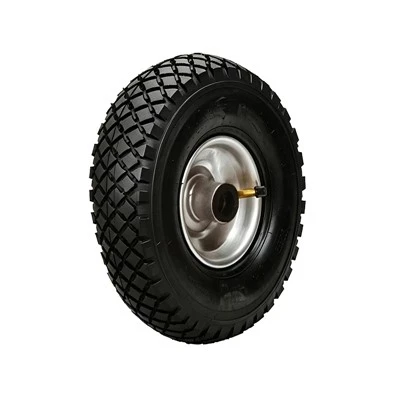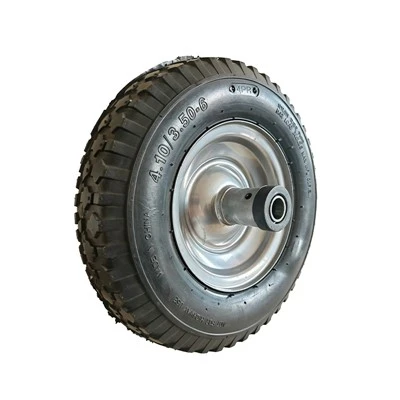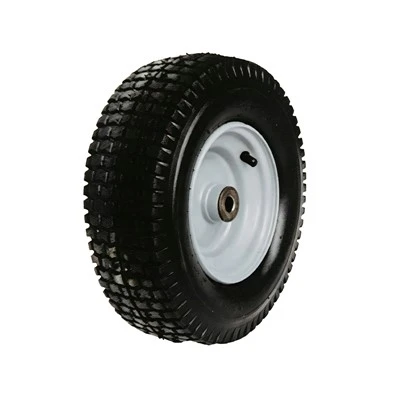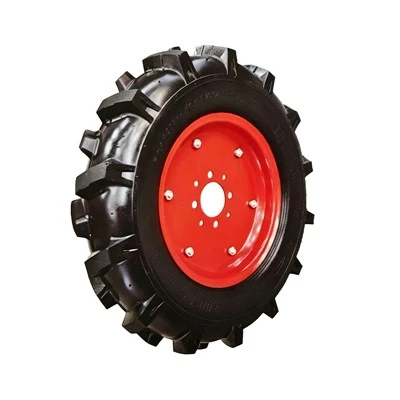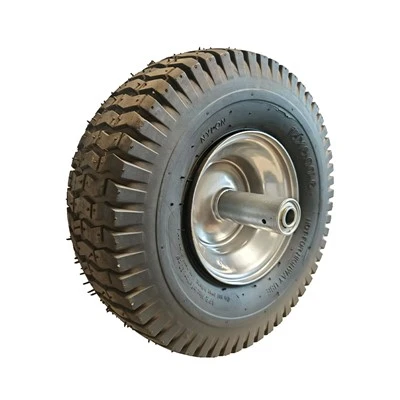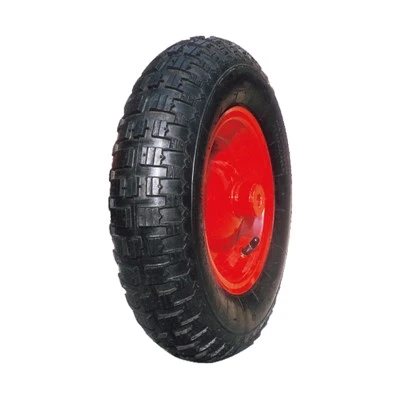

Material handling equipment is often required to operate across a wide range of floor and ground conditions in warehouses, manufacturing facilities, construction sites, and outdoor workplaces. Pneumatic wheels provide an effective mobility solution for hand trucks, platform carts, tool carts, and other equipment where smooth movement and shock absorption are important. Their function goes beyond simply supporting a load. They also help equipment travel more comfortably and reliably across challenging surfaces.
One of the primary functions of a pneumatic wheel is shock absorption. The air-filled tire acts as a flexible cushion when the wheel encounters joints, small obstacles, uneven surfaces, or rough ground. Instead of transferring the full impact directly to the equipment, the tire compresses and absorbs part of the shock. This can help reduce vibration during transportation and provide a smoother ride for both the operator and the load. Pneumatic wheels are therefore particularly useful when handling goods that may be sensitive to excessive vibration or impact.
Another important function is improved mobility on uneven surfaces. The flexible tire can adapt to variations in the ground and maintain effective contact with the surface. This makes pneumatic wheels suitable for gravel paths, rough concrete, loading areas, construction sites, and other outdoor environments where conventional hard wheels may provide a less comfortable ride. Their ability to handle both paved and uneven surfaces also makes them a practical choice for equipment used across indoor and outdoor work areas.
Pneumatic wheels can also help reduce operational impact and improve handling comfort. The cushioning effect of the tire helps minimize vibration as a cart or hand truck moves over irregular ground. Wheel diameter, tread design, bearing configuration, and tire pressure all contribute to overall performance, so these factors should be considered when selecting wheels for a specific application.
Proper tire pressure is particularly important for maintaining consistent performance. Insufficient pressure can increase rolling resistance, while excessive pressure may reduce the tire's ability to absorb shocks effectively. Regular inspection of tire condition and air pressure can therefore help maintain reliable operation and extend the useful life of the wheel.
Overall, pneumatic wheels combine shock absorption, cushioning, ground adaptability, and smooth mobility in a single wheel design. These functions make them well suited to hand trucks, platform carts, industrial carts, and other material handling equipment that needs to operate on uneven or outdoor surfaces. Selecting the right pneumatic wheel for the load and working environment can improve handling stability and provide a more reliable transportation solution.