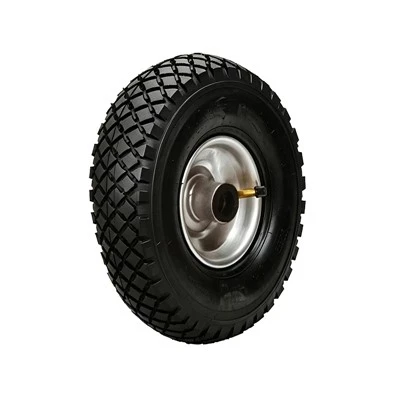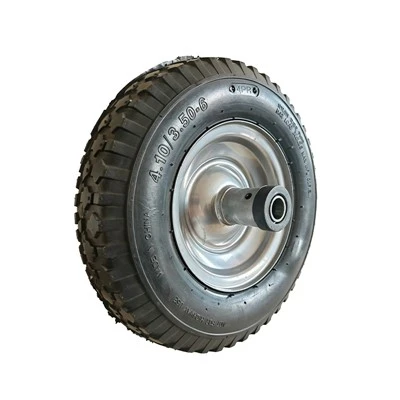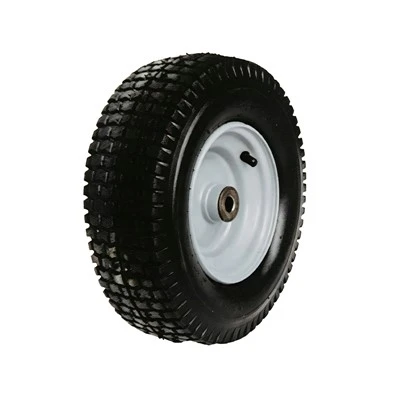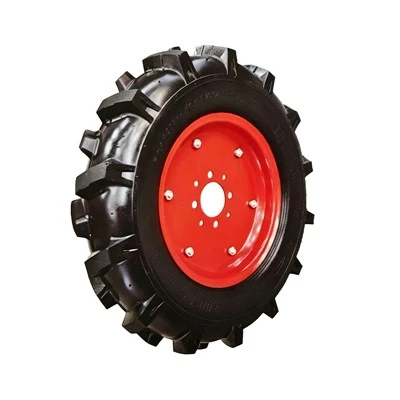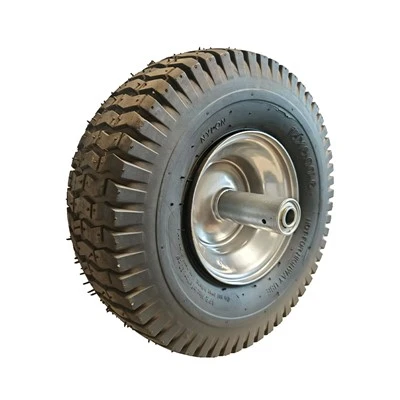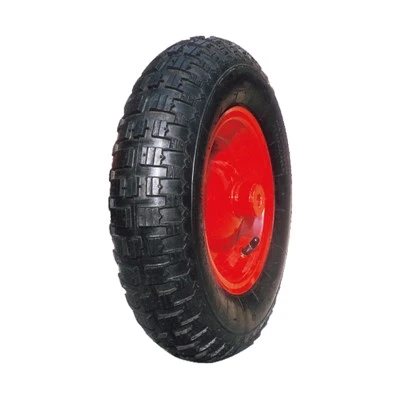

PU foam wheels use polyurethane foam as the primary tire material and are commonly found on hand trucks, platform carts, industrial trolleys, logistics equipment, and other mobile systems. Unlike pneumatic wheels, which depend on internal air pressure for support, PU foam wheels rely on the structural strength and resilience of polyurethane foam to carry loads and provide cushioning. A typical wheel consists of a foam tire body, wheel center, tire-to-center interface, and bearing assembly, with each component contributing to overall performance and durability.
The polyurethane foam tire is the central component of the wheel. A controlled foaming process creates a cellular material structure that combines relatively low weight with useful elasticity. When the wheel is subjected to equipment weight and floor reaction forces, the foam undergoes controlled compression and deformation. This allows the material to distribute part of the applied load and absorb a degree of impact. Foam formulation, density, and hardness can be adjusted to achieve different combinations of load capacity, resilience, and cushioning.
The wheel center provides essential structural support. Positioned at the center of the foam tire, it is commonly manufactured from metal or another suitable structural material. The wheel center connects the tire to the equipment mounting system and transfers loads from the frame into the wheel assembly. For industrial equipment carrying heavier loads, the wheel center must provide sufficient strength and dimensional stability to maintain reliable performance over repeated operating cycles.
The interface between the foam tire and wheel center is another important part of the design. Depending on the manufacturing process and product requirements, the tire may be molded around the wheel center or produced using another engineered assembly method. A secure connection helps prevent unwanted movement, separation, or localized deformation during continuous operation, preserving the integrity of the wheel assembly.
The tread and bearing assembly also have a direct impact on mobility. The tread is the part that contacts the floor, and its width, profile, and material characteristics influence traction, wear resistance, and rolling resistance. The bearing is positioned within the wheel center and works with the equipment axle to support smooth rotation. Proper bearing selection can reduce rolling resistance and improve maneuverability when the equipment is pushed or turned.
Another defining characteristic of PU foam wheels is their inflation-free construction. The tire does not contain a conventional pressurized air chamber, eliminating problems associated with air leakage or insufficient tire pressure. This reduces routine maintenance requirements and can provide consistent support in warehouses, logistics facilities, manufacturing plants, and other material handling environments.
Overall, PU foam wheels combine a resilient polyurethane foam tire, structural wheel center, secure tire-to-center connection, tread design, and bearing assembly into a complete mobility system. By adjusting material properties, dimensions, and structural components according to the application, manufacturers can develop wheel configurations that balance lightweight construction, load support, cushioning, durability, and ease of maintenance for a wide range of material handling equipment.