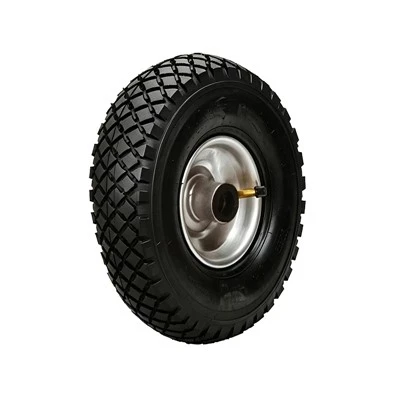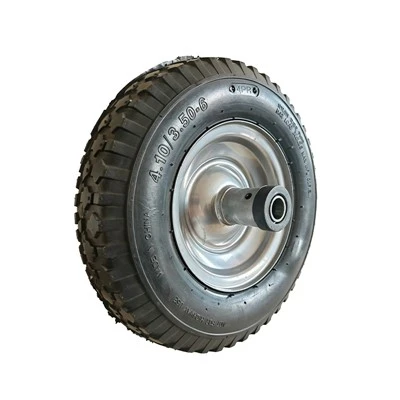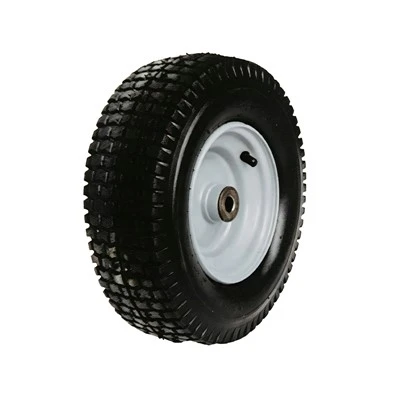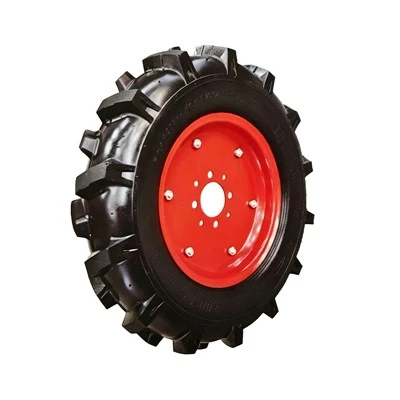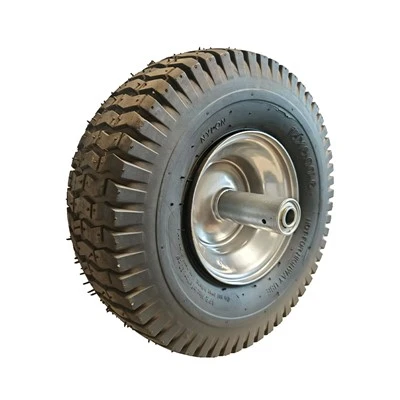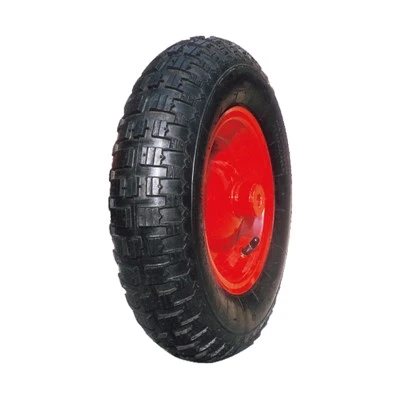

Split-rim solid rubber wheels are widely used on hand trucks, platform carts, industrial trolleys, logistics equipment, and other material handling systems. Because equipment weight, working loads, floor conditions, and operating frequency can vary considerably, wheel selection should involve more than simply choosing a suitable diameter. Load capacity, tire construction, rubber characteristics, rim design, bearing configuration, and mounting requirements should all be considered to ensure reliable performance and long service life.
Load capacity should be one of the first considerations. Determine the weight of the equipment, the maximum cargo load, and any additional forces that may occur during movement. The selected wheel should have an appropriate load rating for the actual application, with a reasonable safety margin. Continuous overloading can accelerate tire wear and place excessive stress on the wheel center and bearing assembly.
Wheel dimensions also have a significant effect on handling performance. Larger-diameter wheels can generally roll more easily over small floor irregularities and obstacles, while wider tires can provide a larger contact area and greater stability. The available mounting space, equipment load, and floor conditions should therefore be considered when selecting tire diameter and width.
Rubber compound and hardness should be matched to the working environment. Applications involving hard floors and frequent movement typically require good wear resistance. Where greater cushioning is desired, a rubber compound with an appropriate level of elasticity may be preferable. Different rubber formulations can offer different combinations of wear resistance, traction, rolling resistance, and floor protection, so material selection should be based on the actual operating conditions.
The split-rim design should also be evaluated carefully. The wheel center needs to provide sufficient structural strength and maintain a secure connection with the solid rubber tire. If the equipment requires regular tire inspection or replacement, a split-rim configuration can offer practical advantages during servicing. It is also essential to confirm that the rim dimensions, axle-hole size, and mounting configuration are compatible with the equipment.
Bearing selection affects rolling performance and maneuverability. For equipment that is operated frequently or carries substantial loads, the bearing should be selected according to the expected working conditions. Smooth rotation, load capacity, durability, and proper fit with the axle are all important factors.
Overall, selecting a split-rim solid rubber wheel requires consideration of load capacity, wheel dimensions, rubber compound, rim construction, bearing configuration, and operating environment. Matching these factors to the actual application can help achieve a better balance of durability, stability, and maneuverability while providing dependable mobility for material handling equipment.