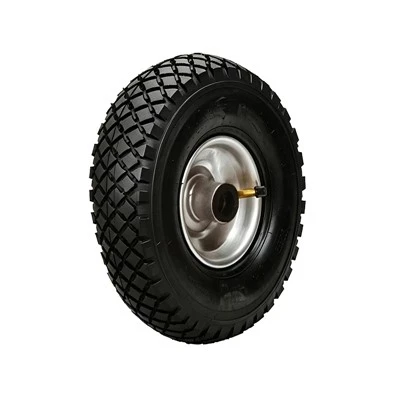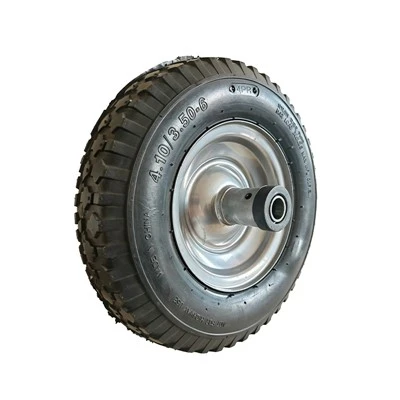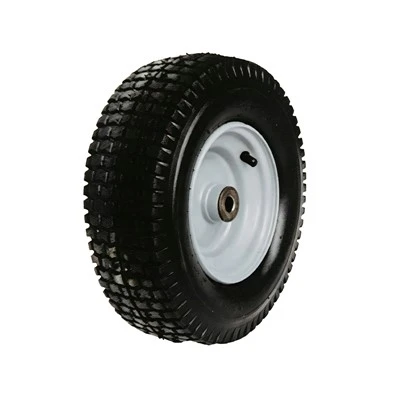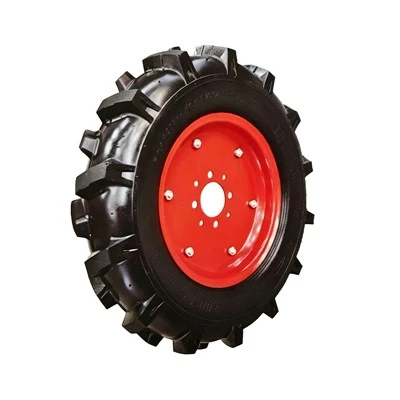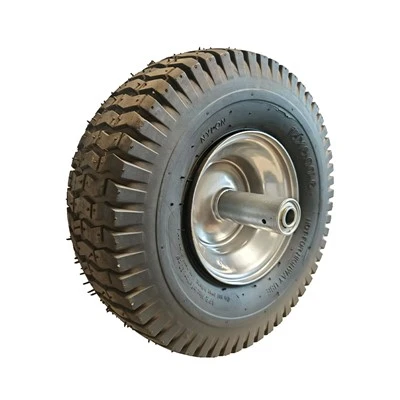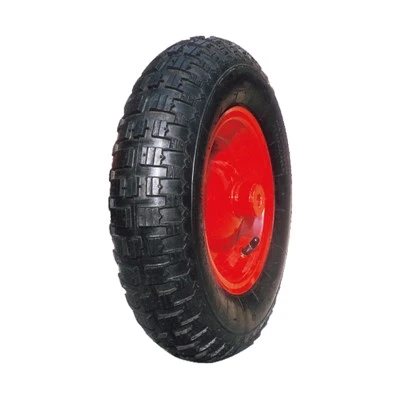

Split-rim solid rubber wheels combine a multi-piece wheel center with a solid rubber tire, creating a durable wheel assembly for hand trucks, platform carts, industrial trolleys, logistics equipment, and other material handling applications. Unlike pneumatic wheels, this design does not rely on internal air pressure for load support. Instead, the solid rubber body and split rim work together to provide structural strength, durability, and practical serviceability.
The split-rim construction is one of the defining features of this wheel design. The wheel center is typically manufactured from two or more metal sections that are assembled with bolts or other suitable fasteners. This multi-piece configuration provides mechanical support while allowing easier access to the tire and wheel center when inspection, servicing, or replacement is required. Accurate alignment between the rim sections is essential for maintaining wheel stability during operation.
The solid rubber tire forms the main load-bearing part of the assembly. Unlike an air-filled tire, a solid rubber tire has no pressurized cavity and relies on the strength and elasticity of the rubber compound to support the working load. As a result, its basic support characteristics are not affected by air leakage or changes in tire pressure. This also eliminates the need for routine inflation. The inherent elasticity of rubber can provide a degree of cushioning when the wheel encounters minor surface irregularities.
The connection between the rubber body and wheel center is another important structural consideration. A reliable interface helps maintain the integrity of the wheel assembly and minimizes unwanted movement or deformation during repeated operation. Rubber compounds with different hardness, wear resistance, and elasticity can be selected according to the load requirements and working conditions of the equipment.
The bearing assembly is responsible for supporting smooth wheel rotation. Positioned within the wheel center, the bearing works with the equipment axle to allow the wheel to rotate efficiently. Proper bearing selection, wheel-center dimensions, and installation accuracy can help reduce rolling resistance and improve maneuverability when the equipment is pushed or turned.
Tread design also contributes to overall wheel performance. Different tread patterns can provide different levels of traction, wear resistance, and rolling efficiency. Wheels used on warehouse and factory floors may prioritize smooth movement and durability, while applications involving more demanding industrial surfaces may require greater tread strength and traction.
Overall, a split-rim solid rubber wheel consists primarily of a multi-piece wheel center, solid rubber body, tread surface, and bearing assembly. These components work together to provide load-bearing stability, wear resistance, puncture resistance, and convenient servicing. With appropriate material selection and structural design, split-rim solid rubber wheels can provide dependable mobility for a wide range of industrial material handling equipment.