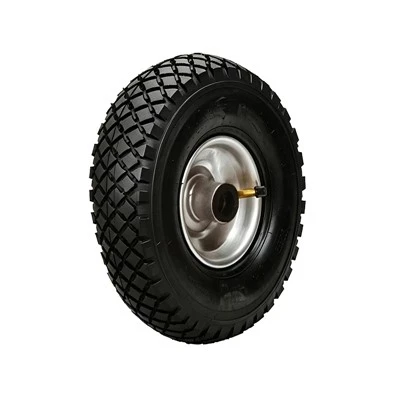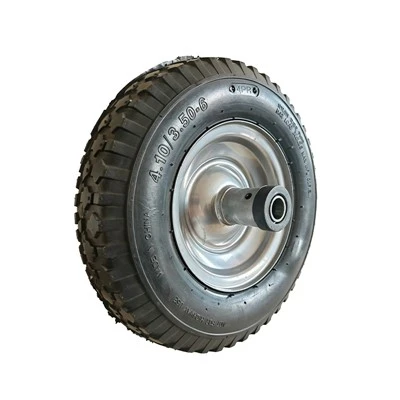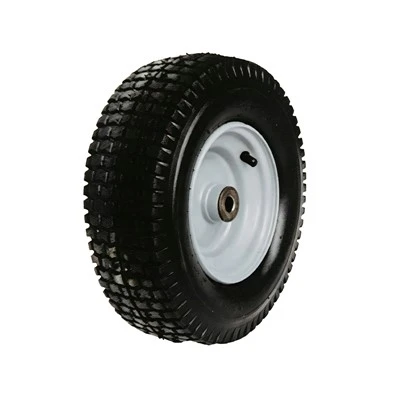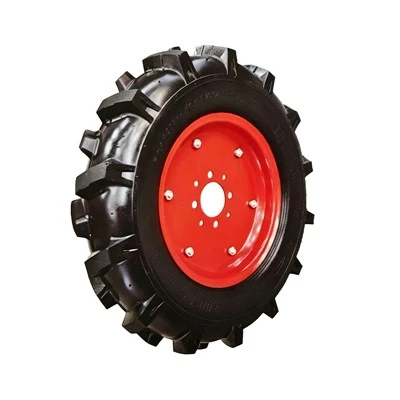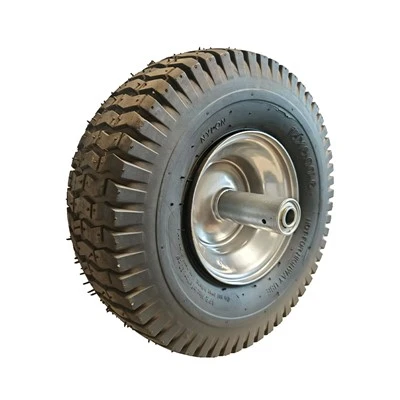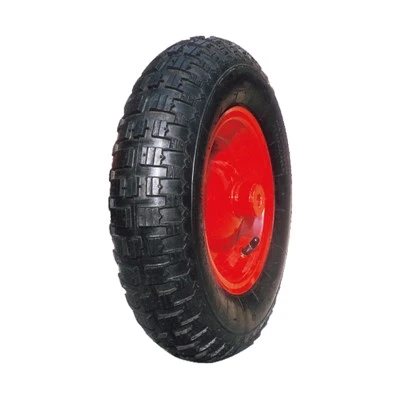

Pneumatic wheels are widely used on hand trucks, platform carts, utility trolleys, industrial carts, and outdoor material handling equipment. Because different applications have different requirements for load capacity, cushioning, and mobility, choosing the right pneumatic wheel requires more than simply selecting a tire size. Equipment weight, load requirements, ground conditions, operating frequency, and the working environment should all be taken into consideration.
Load capacity should be one of the first factors evaluated. The total weight of the equipment and its maximum working load should be determined before selecting a wheel. The expected load on each wheel can then be assessed based on the number of wheels supporting the equipment, with an appropriate safety margin included. Continuous overloading can accelerate tire and bearing wear and may also affect the stability of the equipment. Selecting a wheel with a suitable load rating is therefore essential for reliable operation.
Wheel diameter and tire width also have a significant influence on performance. Larger pneumatic wheels generally provide better obstacle clearance and can travel more effectively across uneven ground. They can also help reduce the impact caused by rough surfaces. Smaller wheels have a more compact footprint and may be preferable where installation space or maneuverability is limited. The appropriate wheel dimensions should be selected according to the equipment design, available operating space, and expected ground conditions.
The operating environment is another important consideration. Equipment used primarily on smooth warehouse floors may place greater emphasis on rolling efficiency and easy maneuverability. For applications involving gravel, rough concrete, construction sites, or other demanding surfaces, tire durability, traction, and ground adaptability become more important. Equipment that moves between indoor and outdoor areas may require a balanced wheel design capable of handling changing surface conditions.
Tire pressure directly affects pneumatic wheel performance. Proper inflation helps maintain a balance between load support, rolling resistance, and shock absorption. Underinflation can increase rolling resistance and may affect stability, while excessive inflation can reduce the tire's cushioning effect. Tire pressure should therefore be checked regularly and maintained according to the manufacturer's specifications.
The wheel center, bearing configuration, and mounting method should also be considered, particularly for industrial equipment that operates frequently or carries heavier loads. A suitable combination of tire, wheel center, and bearing can contribute to smoother movement and longer service life.
Overall, selecting the right pneumatic wheel requires a comprehensive evaluation of load requirements, wheel dimensions, ground conditions, tire pressure, construction, and operating environment. Matching the wheel to the actual application allows users to make better use of its cushioning, load-supporting, and terrain-adapting capabilities while improving the stability, efficiency, and practicality of material handling equipment.