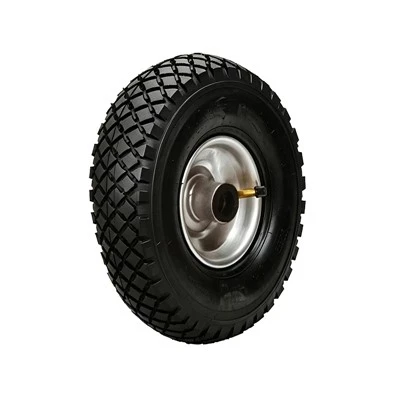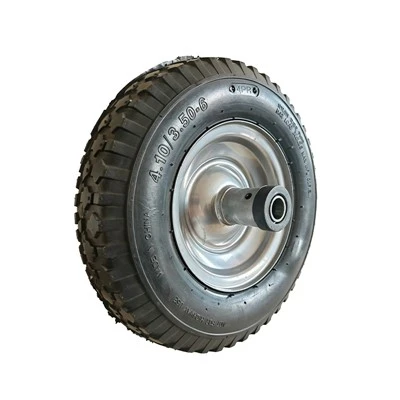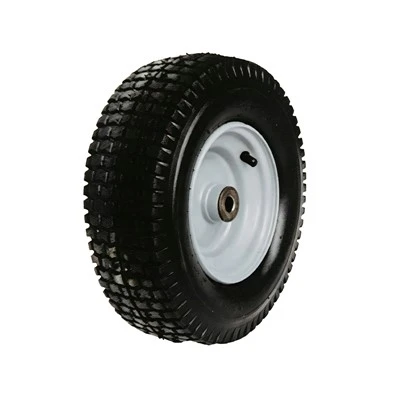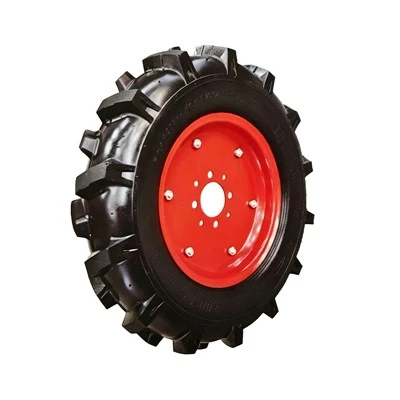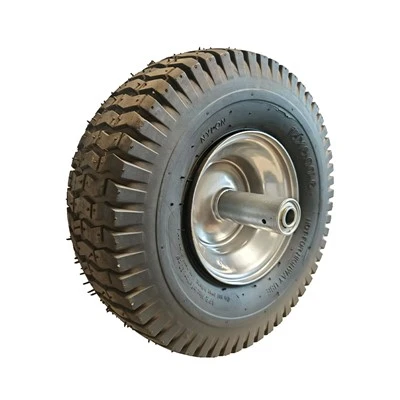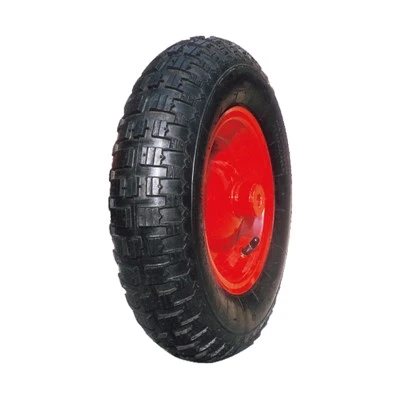

Wheels play an important role in the performance of hand trucks, platform carts, tool carts, industrial trolleys, and other material handling equipment. Pneumatic wheels are widely used where shock absorption, traction, and mobility on uneven surfaces are important. Depending on their tire construction, internal design, rim configuration, and bearing arrangement, pneumatic wheels are available in several forms to meet different operating requirements.
One of the most common configurations is the tube-type pneumatic wheel. It consists of an outer rubber tire and a separate inner tube that holds the compressed air. The air-filled structure provides effective cushioning and allows the tire to flex when traveling over uneven ground. This makes tube-type pneumatic wheels suitable for hand trucks, agricultural carts, construction equipment, and other applications where smooth movement over irregular surfaces is required.
Another option is the tubeless pneumatic wheel. Instead of using a separate inner tube, the tire and rim form an airtight chamber that retains the required air pressure. This design eliminates the inner tube as a separate component, but it requires precise matching between the tire, rim, and sealing surfaces. Tubeless configurations are commonly considered for industrial and outdoor equipment where practical maintenance and reliable mobility are important.
Pneumatic tires can also be differentiated by their carcass construction. Crossply pneumatic tires, for example, use multiple layers of fabric arranged diagonally across the tire. This construction provides flexibility and resistance to impact, making it suitable for certain industrial vehicles and equipment operating in demanding outdoor environments.
The wheel center and bearing configuration are also important when selecting a pneumatic wheel. Steel wheel centers are often chosen for applications that require greater structural strength and durability, while the bearing design can influence rolling resistance, maneuverability, and ease of operation. For hand trucks and carts that are moved frequently, selecting an appropriate bearing configuration can contribute to smoother handling.
There is no single pneumatic wheel design that is ideal for every application. The right choice depends on factors such as equipment weight, rated load, operating frequency, floor conditions, and whether the equipment is primarily used indoors or outdoors. For carts operating on gravel, rough concrete, construction sites, or other irregular surfaces, pneumatic wheels with strong cushioning and traction characteristics can provide significant practical benefits.
As material handling applications continue to diversify, pneumatic wheel designs are becoming increasingly specialized. Selecting the appropriate tire construction, wheel center, and bearing configuration according to the working environment can help hand trucks and industrial carts achieve smoother mobility, better stability, and more reliable performance across a wide range of handling applications.