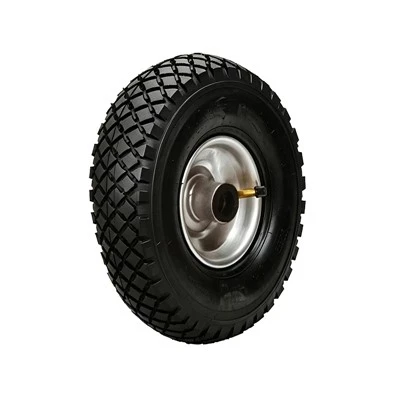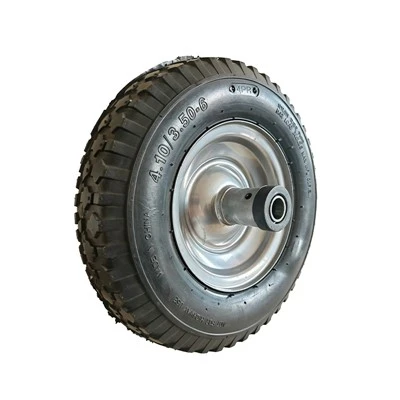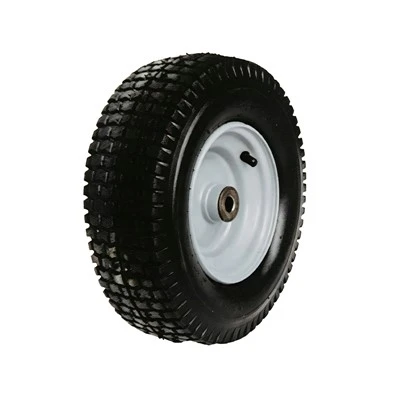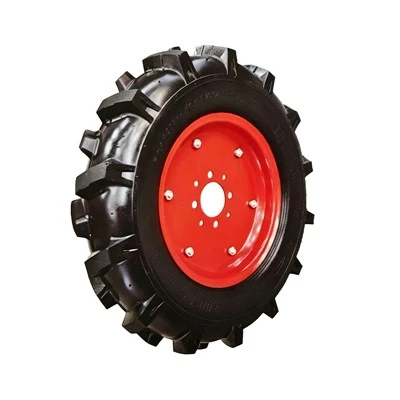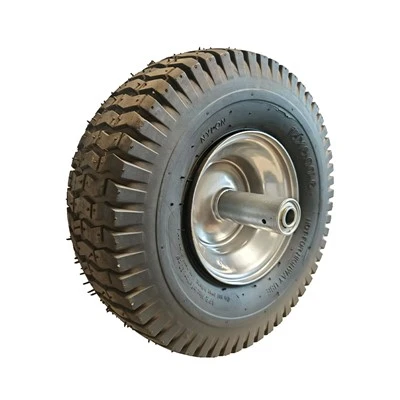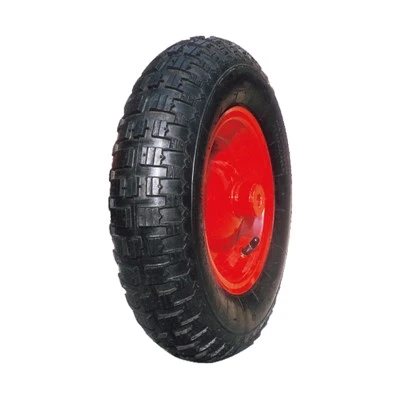

As warehouses, manufacturing facilities, construction sites, and outdoor operations place greater emphasis on efficient material movement, pneumatic wheels have become a practical option for hand trucks, platform trucks, utility carts, and other material handling equipment. Unlike solid wheels, pneumatic wheels are designed with air-filled rubber tires, giving them a degree of flexibility that helps absorb shocks and vibrations when equipment travels over uneven surfaces.
One of the most important advantages of pneumatic wheels is their cushioning performance. Material handling equipment is often required to operate on surfaces with joints, small stones, rough concrete, or other irregularities. The flexible tire can deform as it passes over these obstacles, absorbing part of the impact and helping the equipment move more smoothly. This cushioning effect can also help reduce vibration transferred to the load during transportation.
Pneumatic wheels also offer good adaptability to different ground conditions. Because the tire is relatively soft and flexible, it can maintain effective contact with the ground and provide reliable traction on gravel, rough concrete, and various outdoor surfaces. This makes pneumatic wheels particularly useful for hand trucks and carts that need to move between indoor and outdoor working areas or operate on less-than-perfect floors.
A typical pneumatic wheel consists of a rubber tire, a rim, and a bearing assembly. Tire pressure is an important factor in overall performance, as it can influence rolling resistance, load handling, stability, and shock absorption. The wheel should therefore be selected according to the equipment configuration, expected load, operating frequency, and ground conditions. Regular inspection of tire pressure and tire condition is also important to maintain consistent performance.
Overall, pneumatic wheels are well suited to material handling applications where shock absorption, ground adaptability, and outdoor mobility are important considerations. When properly matched with the design and operating conditions of hand trucks, platform trucks, and industrial carts, pneumatic wheels can provide a smoother and more comfortable handling experience while helping equipment perform reliably across a wider range of surfaces.