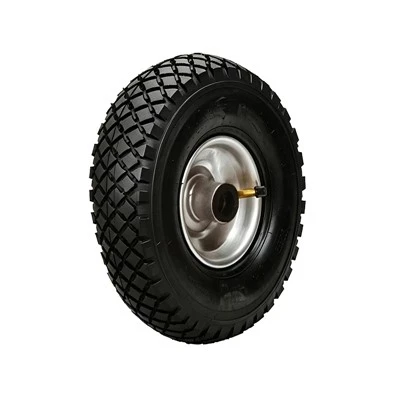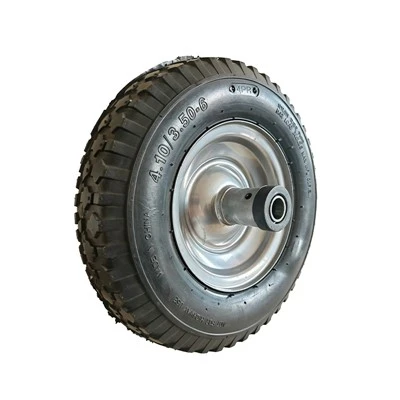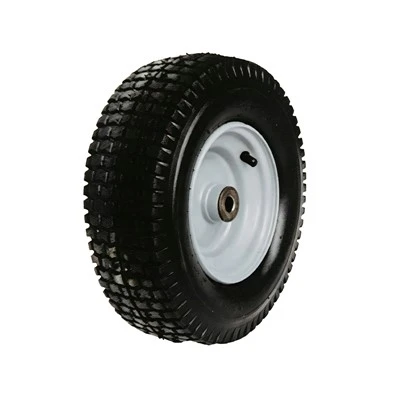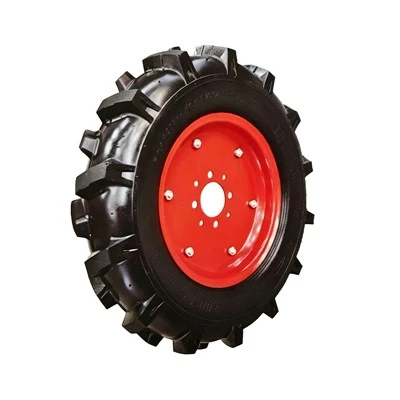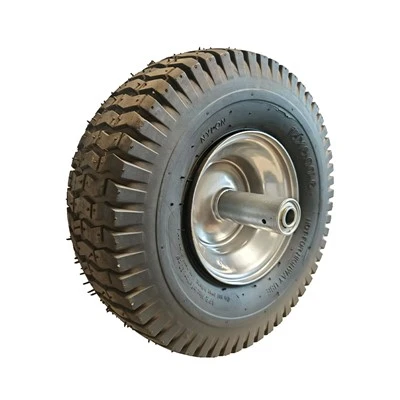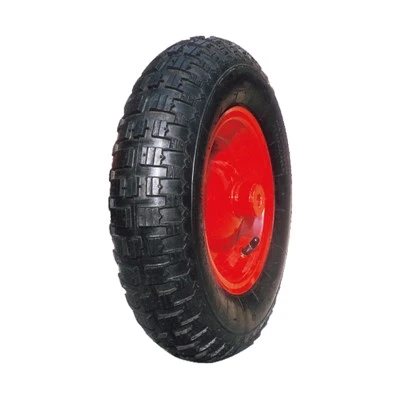

Solid rubber wheels are widely used on hand trucks, platform carts, industrial trolleys, logistics equipment, and other mobile handling systems. Their solid rubber construction does not rely on an air-filled chamber for support, providing several practical benefits, including no need for inflation, strong puncture resistance, good wear resistance, and stable operation. Depending on the equipment and working environment, solid rubber wheels can provide load support, cushioning, vibration reduction, and reliable mobility.
Load support is the fundamental function of a solid rubber wheel. During material handling operations, the wheels carry the weight of both the equipment and its load while transferring the force to the ground. Because the wheel does not depend on air pressure, its basic support characteristics are not affected by gradual pressure loss. Selecting a wheel with an appropriate load rating can help maintain stable equipment performance, particularly in warehouses, manufacturing facilities, and other environments where carts are moved frequently.
Wear resistance and puncture resistance are also important advantages. Industrial working environments may contain metal fragments, sharp debris, and other objects that can damage conventional pneumatic tires. A solid rubber wheel has no pressurized air chamber, so a puncture does not result in sudden air loss or the same type of tire failure associated with pneumatic designs. Its durable absorb part of the impact generated during movement and reduce some vibration between the equipment and the floor. Different rubber. A properly designed tread can provide suitable traction and help maintain stable movement on smooth indoor surfaces. When combined with an rubber construction also makes it suitable for frequent movement across hard indoor surfaces.
Solid rubber wheels can provide a degree of cushioning and vibration reduction as well. Although their shock-absorbing characteristics differ from those of pneumatic wheels, rubber itself has a certain degree of elasticity. This allows the wheel to absorb part of the impact generated during movement and reduce some vibration between the equipment and the floor. Different rubber hardness levels can be selected to achieve an appropriate balance between load support, durability, and cushioning.
Another important function is stable movement and consistent ground contact. A properly designed tread can provide suitable traction and help maintain stable movement on smooth indoor surfaces. When combined with an appropriate wheel center and bearing assembly, a solid rubber wheel can also contribute to smoother handling and easier equipment operation.
Overall, solid rubber wheels provide load support, wear resistance, puncture resistance, cushioning, vibration reduction, and stable mobility. Their maintenance-free inflation design makes them particularly practical for warehouses, manufacturing facilities, commercial environments, and other indoor handling applications. By selecting the appropriate wheel size, load rating, rubber compound, and bearing configuration for the actual working conditions, users can make better use of the performance advantages offered by solid rubber wheels.