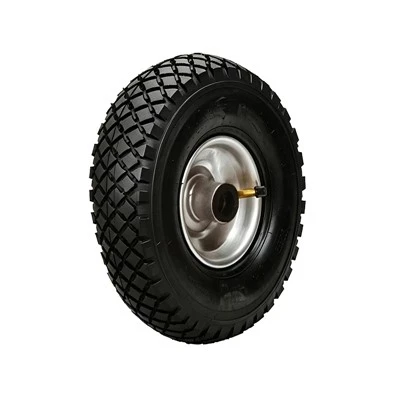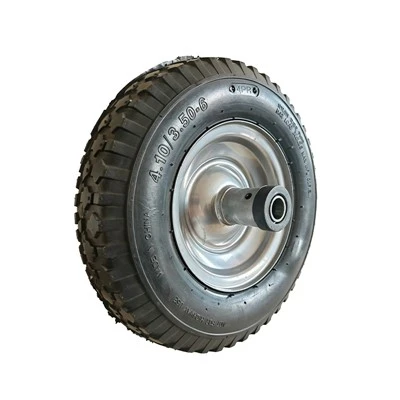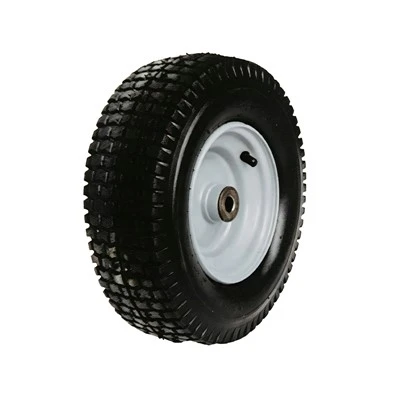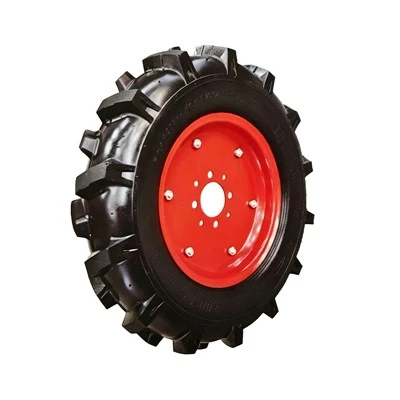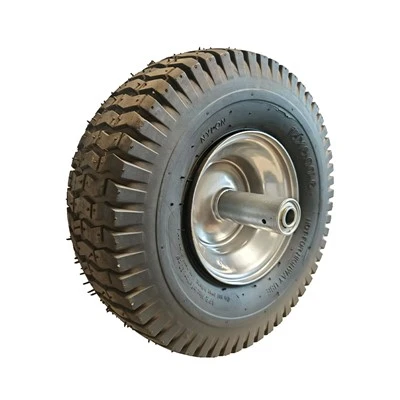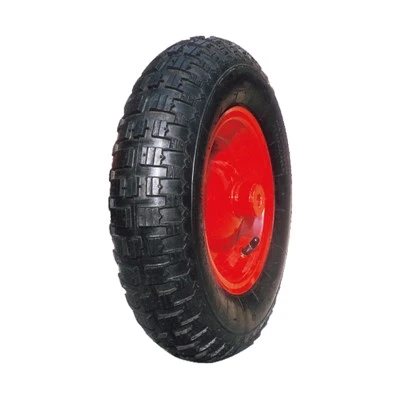

Solid rubber wheels are widely used on industrial carts, hand trucks, platform trolleys, logistics equipment, and other material handling systems. Unlike pneumatic wheels, solid rubber wheels do not rely on an air-filled chamber for structural support. Instead, the solid rubber body, wheel center, and bearing assembly work together to carry the equipment and its load. This construction provides stable performance, good wear resistance, and strong resistance to puncture-related failures.
The solid rubber body is the primary component of the wheel. Because the tire is manufactured as a solid structure without a separate air chamber, its basic performance is not affected by changes in air pressure. Rubber naturally provides a certain degree of elasticity, allowing the wheel to deform slightly under load and absorb part of the impact generated during movement. Different rubber compounds and hardness levels can be selected to achieve the required balance of wear resistance, load support, traction, and cushioning.
The wheel center provides the structural connection between the rubber body and the mounting system. It is commonly manufactured from metal to provide the strength required to support the wheel and its working load. A secure bond between the rubber tread and wheel center is essential for maintaining structural integrity during repeated operation. Wheel-center dimensions, material selection, and construction should be matched to the equipment's load requirements and mounting configuration.
Tread design also plays an important role in overall wheel performance. Different tread patterns can provide different levels of traction, stability, and rolling efficiency. Wheels intended for warehouses and manufacturing floors may prioritize smooth movement and floor protection, while wheels used in demanding industrial environments may require greater wear resistance and traction.
The bearing assembly directly affects rotational performance. Located within the wheel center, the bearing works with the equipment axle to support smooth wheel rotation. Proper bearing selection and accurate installation can reduce rolling resistance and improve maneuverability, allowing operators to move carts and handling equipment more easily.
Overall, a solid rubber wheel is typically built around a solid rubber body, wheel center, tread surface, and bearing assembly, with each component contributing to the overall load-bearing and mobility characteristics of the product. Its inflation-free construction, puncture resistance, wear resistance, and structural stability make it particularly suitable for warehouses, manufacturing facilities, logistics operations, and other indoor material handling environments. Careful material selection and structural engineering can further improve durability and long-term performance.