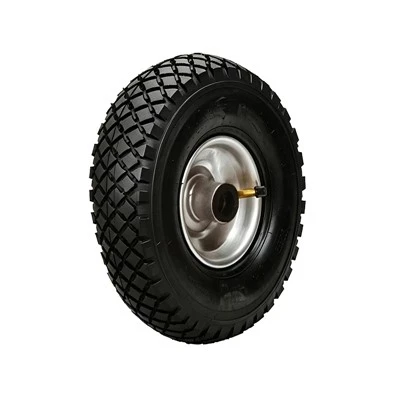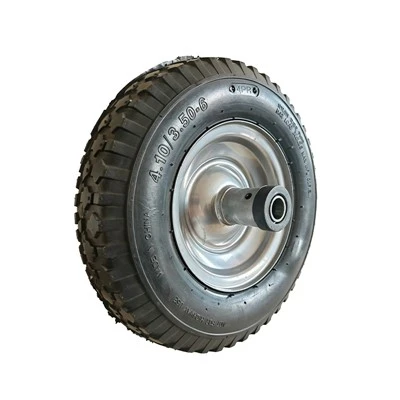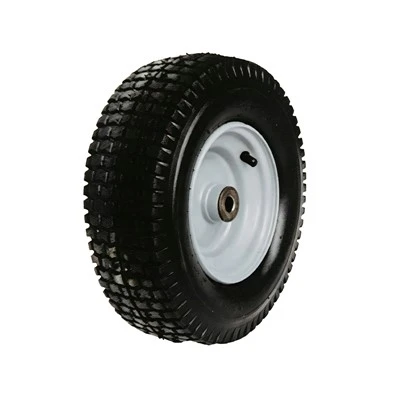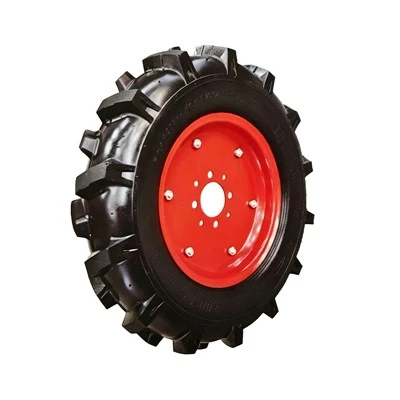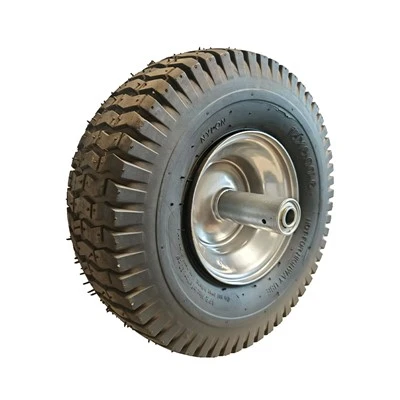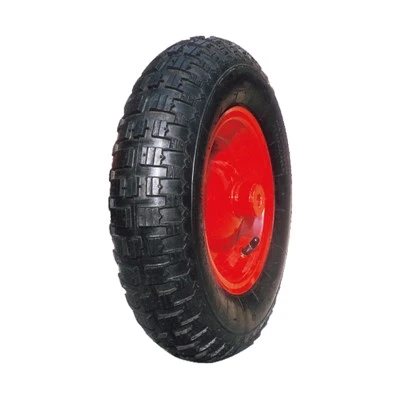

Solid rubber wheels are widely used on industrial carts, hand trucks, platform trolleys, logistics equipment, and other material handling applications. Unlike pneumatic wheels, solid rubber wheels do not contain an air chamber. Instead, they rely on a solid rubber body and wheel center to provide structural support. This construction gives them good wear resistance, durability, and operational stability, making them particularly suitable for applications where equipment is used frequently and tire maintenance needs to be minimized.
Stable construction is one of the main characteristics of solid rubber wheels. Because there is no air-filled chamber, the wheel is not affected by changes in tire pressure during normal operation. This eliminates the need for routine inflation and reduces the risk of equipment downtime caused by air leakage. For material handling equipment used regularly throughout the working day, this can make routine operation and maintenance more convenient.
Good wear resistance is another important advantage. The solid rubber body is designed to withstand repeated contact with the ground and the friction generated during frequent movement. In warehouses, manufacturing facilities, distribution centers, and other high-use environments, an appropriate rubber compound and tread design can help maintain wheel performance over an extended service period.
Solid rubber wheels also provide strong resistance to punctures and air-related failures. Since there is no pressurized air chamber, sharp objects such as nails, metal fragments, or other debris are less likely to cause the type of sudden loss of function associated with punctured pneumatic tires. This makes solid rubber wheels a practical choice for industrial environments where debris may be present on the floor.
Another notable characteristic is stable load support and reliable operation. Different rubber compounds and hardness levels can be selected according to the application. Harder rubber can provide greater wear resistance and load support, while softer compounds can offer improved cushioning and reduced vibration. By properly matching the rubber material, wheel center, diameter, and bearing configuration, manufacturers can adapt the wheel to different equipment and working conditions.
Overall, solid rubber wheels offer maintenance-free inflation, wear resistance, puncture resistance, stable load support, and reliable operation. They are well suited to indoor warehouses, manufacturing facilities, logistics centers, and other material handling environments. When selecting a solid rubber wheel, users should consider the equipment load, floor conditions, operating frequency, and required level of cushioning to ensure the wheel is properly matched to the application.