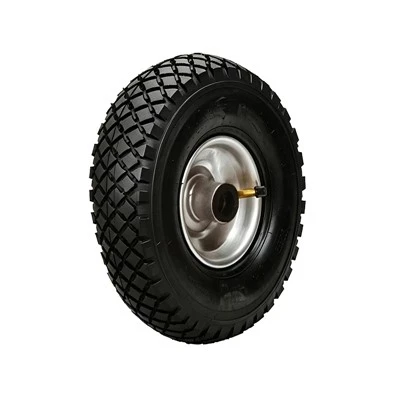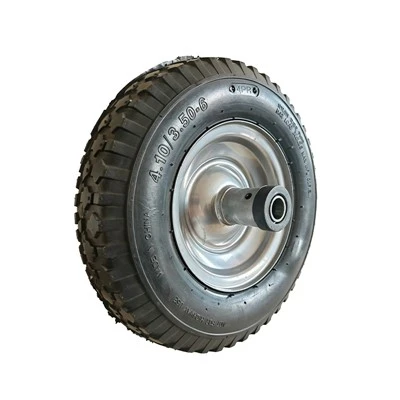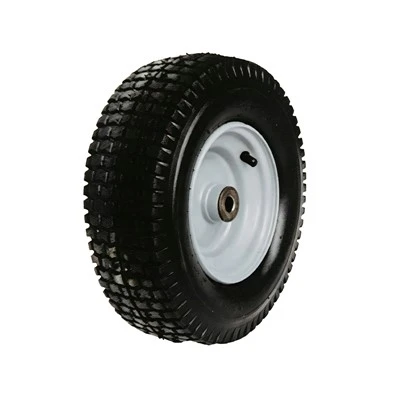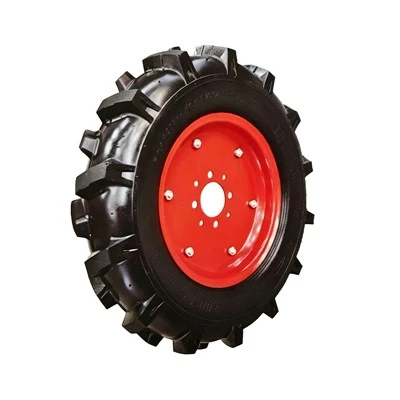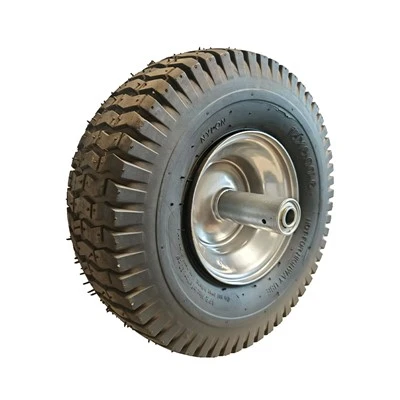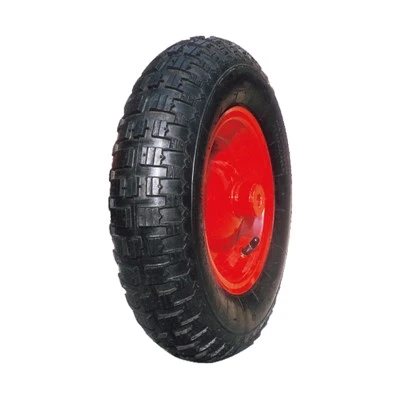

As warehousing, manufacturing, and commercial handling equipment continues to evolve toward lighter and more efficient designs, PU foam wheels have become a practical choice for hand trucks, platform carts, industrial trolleys, and other mobile equipment. However, operating conditions vary from one application to another. Selecting the right wheel therefore requires more than simply choosing a suitable diameter or appearance. Load requirements, wheel dimensions, foam properties, floor conditions, and mounting components should all be evaluated together.
Load capacity should be the first consideration. The selection process should account for the equipment's own weight, the maximum cargo load, and additional dynamic forces that may occur during starting, stopping, turning, or traveling over uneven surfaces. The wheel's rated load capacity should be appropriate for the actual working conditions, with a reasonable safety margin. Continuous overloading can cause excessive deformation of the foam, accelerate wear, and reduce the service life of the wheel.
Wheel diameter and width also have a direct effect on handling performance. Larger-diameter wheels generally roll more easily over floor joints, small obstacles, and minor surface irregularities. Wheel width affects the contact area between the tire and the floor and can influence overall stability. The appropriate dimensions should therefore be selected according to the available mounting space, equipment load, and floor conditions.
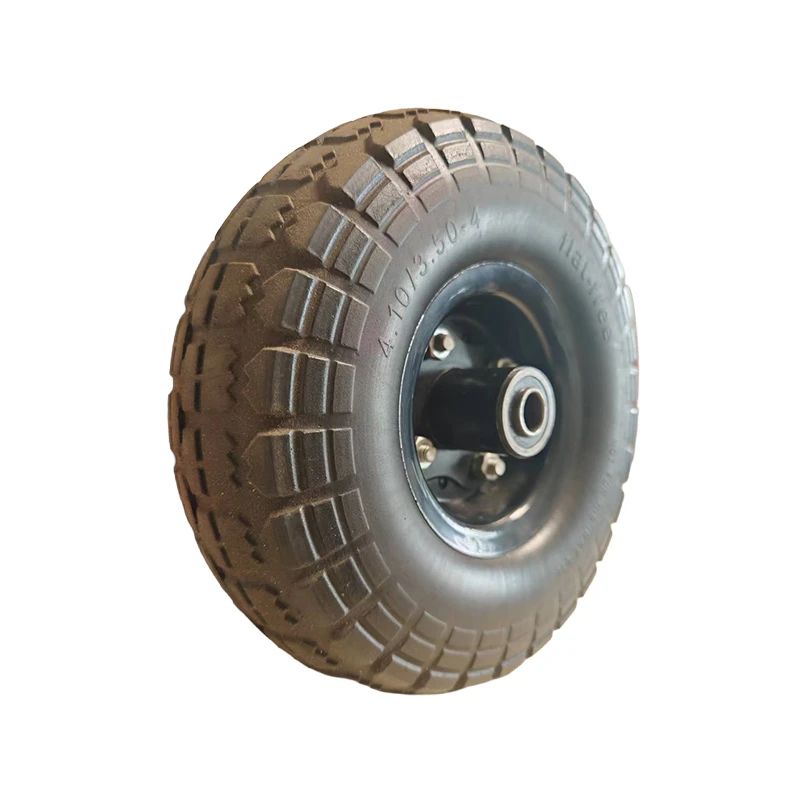
Foam density and hardness are key factors in determining wheel performance. Higher-density PU foam generally provides greater load support and improved wear resistance, making it suitable for frequent handling and relatively demanding applications. A more resilient foam formulation can provide greater cushioning and impact absorption. The right specification should achieve an appropriate balance between load capacity, durability, cushioning, and rolling resistance.
The operating environment should also be taken into account. Warehouses and manufacturing facilities often have relatively smooth hard floors, where wear resistance and rolling efficiency are important. If equipment must travel over more irregular surfaces, greater attention should be given to tire resilience, tread characteristics, and structural strength. Temperature, humidity, oil exposure, and contact with certain chemicals may also affect polyurethane performance and should be considered during selection.
The wheel center and bearing assembly must be compatible with the equipment. The wheel center should provide sufficient structural strength, while the bearing dimensions and axle-hole configuration must match the equipment's mounting system. For frequently operated equipment, bearing durability and smooth wheel rotation are also important considerations.
Overall, selecting a PU foam wheel requires careful evaluation of load capacity, wheel diameter and width, foam density, hardness, operating environment, wheel-center construction, and bearing configuration. Matching these factors to the actual application can help users take full advantage of the lightweight, resilient, cushioning, and inflation-free characteristics of PU foam wheels while achieving reliable long-term performance.