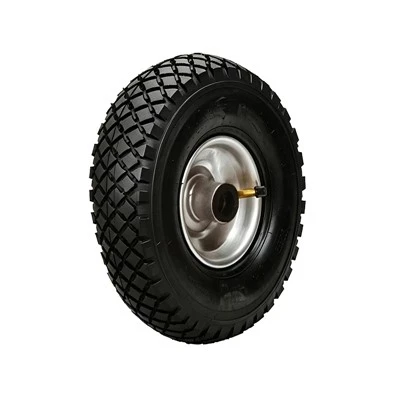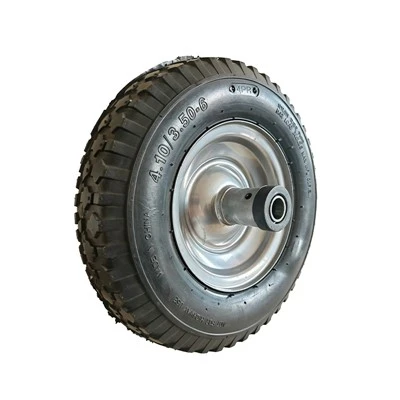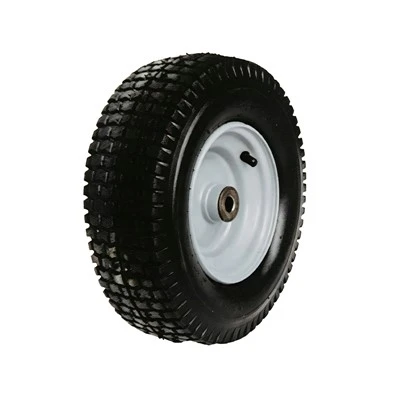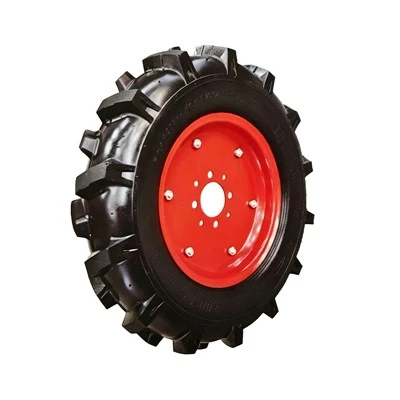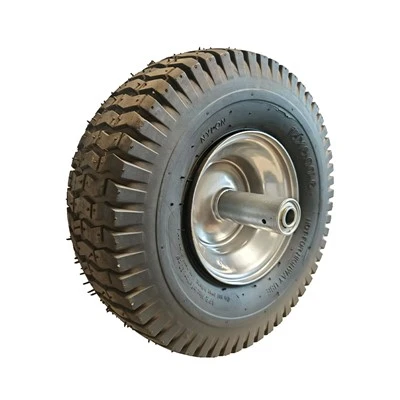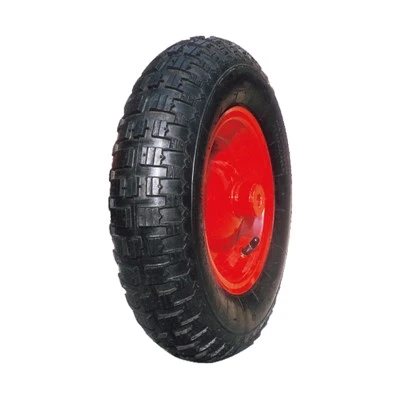

Split-rim solid rubber wheels are commonly used on hand trucks, industrial carts, platform trolleys, and material handling equipment. This wheel design combines a solid rubber tire with a multi-piece wheel center, allowing the tire, rim, and bearing assembly to work together to support loads and provide controlled movement. Unlike pneumatic wheels, solid rubber wheels do not depend on internal air pressure, so their basic load-supporting characteristics remain consistent without the need for inflation.
The operating process begins with load transfer. When material handling equipment is loaded, the weight of the equipment and its cargo is transferred through the frame and mounting system to the wheels. The split rim provides structural support and transfers the load into the solid rubber body, which then distributes the force through the tire surface to the ground. Proper rim construction and rubber selection are essential for maintaining stable load support during operation.
As the equipment moves, the solid rubber tire undergoes controlled elastic deformation. When the wheel passes over floor joints, minor irregularities, or small obstacles, the rubber can deform slightly and absorb part of the impact. Although the cushioning mechanism differs from that of a pneumatic tire, the solid rubber construction provides a practical balance between load support, durability, and resistance to wear.
The split rim provides structural support, connection, and service access. The wheel center consists of multiple components that are assembled and secured with appropriate fasteners to form a complete wheel structure. The rim supports the rubber tire and maintains the required connection with the equipment. When inspection or tire replacement is necessary, the multi-piece construction can provide easier access to the wheel components. After maintenance, the rim sections and fasteners must be correctly positioned and securely assembled.
The bearing assembly enables rotational movement. The equipment axle is positioned through the bearing, allowing the wheel center and solid rubber tire to rotate around the axle as the cart or hand truck moves. This converts the applied pushing force into rolling motion and helps reduce resistance during operation. Bearing type, dimensions, and installation accuracy can all influence rotational smoothness and overall maneuverability.
Overall, a split-rim solid rubber wheel operates through the coordinated action of load transfer, controlled rubber deformation, rim support, and bearing rotation. Its inflation-free construction, wear resistance, puncture resistance, and service-friendly design make it a practical choice for warehouses, manufacturing facilities, logistics operations, and other high-frequency indoor material handling applications.