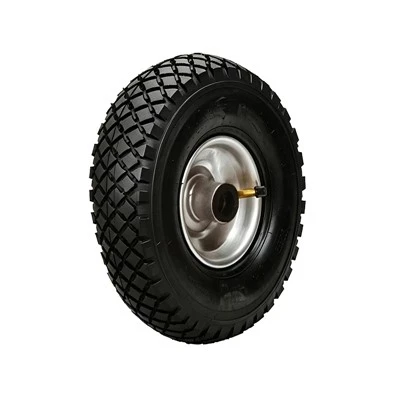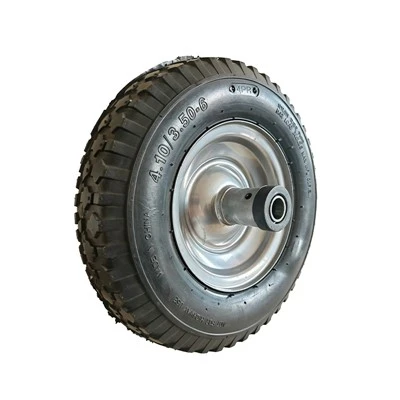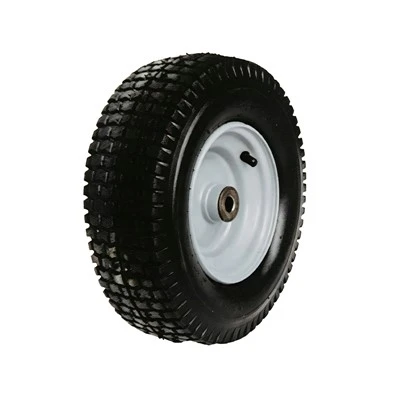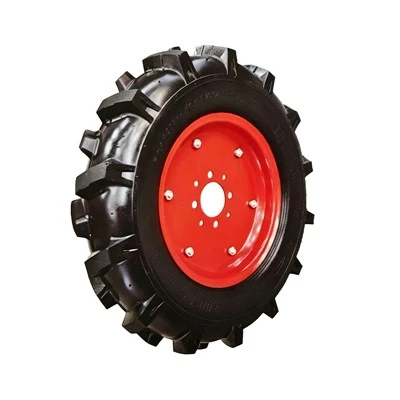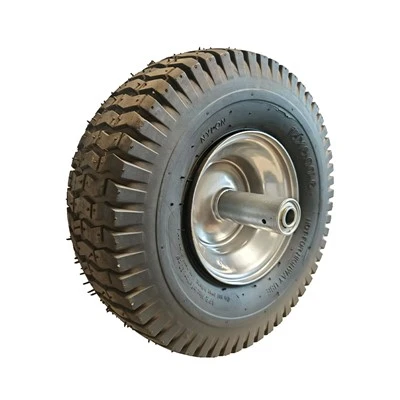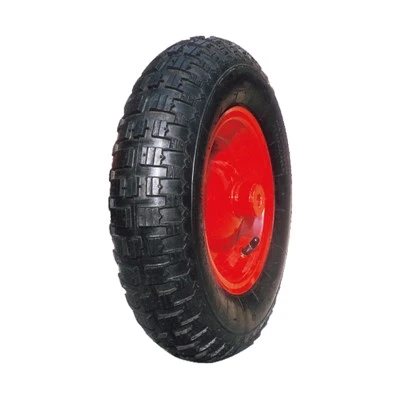

Solid rubber wheels are widely used on hand trucks, platform carts, industrial trolleys, and logistics equipment because of their wear resistance, puncture resistance, stable performance, and maintenance-free construction. Depending on the wheel-center design, rubber compound, mounting configuration, and intended application, solid rubber wheels can be manufactured in several different forms. Each type offers a different balance of load capacity, durability, cushioning, and maneuverability.
Rubber-tired wheels with metal centers are one of the most common configurations. These wheels use a metal wheel center as the structural support and a solid rubber layer around the outside. The metal center provides strength and load support, while the rubber tread contacts the floor and provides elasticity, traction, and a degree of cushioning. This construction offers a practical balance between durability and load capacity and is suitable for industrial carts, logistics equipment, and material handling applications in manufacturing facilities.
Solid wheels using composite rubber or polyurethane-based tread materials are another option for industrial applications. Different material combinations can be engineered to improve specific characteristics such as wear resistance, load capacity, rolling efficiency, and floor protection. Depending on the operating conditions, these wheels can be used in warehouses, distribution facilities, manufacturing plants, and other environments where reliable handling performance is required.
Solid rubber wheels can also be differentiated by their wheel-center construction. One-piece wheel centers provide a straightforward and robust design that is relatively simple to install. Multi-piece or split configurations can provide greater service flexibility for applications where wheel components need to be inspected, assembled, or replaced. The appropriate design depends on the equipment structure and maintenance requirements.
Rubber hardness is another important factor in wheel selection. Harder rubber compounds generally provide strong wear resistance and load support, making them suitable for hard floors and high-frequency handling operations. Softer compounds can provide greater cushioning and help reduce some vibration during movement. Selecting the appropriate hardness requires consideration of equipment weight, floor material, operating frequency, and the desired balance between durability and ride comfort.
Overall, selecting the right type of solid rubber wheel should be based on the actual operating conditions. Factors such as wheel-center construction, rubber compound, hardness, load capacity, and mounting configuration should be evaluated together. Proper selection can help material handling equipment achieve reliable mobility and durability across warehouses, manufacturing facilities, logistics operations, and other industrial environments.