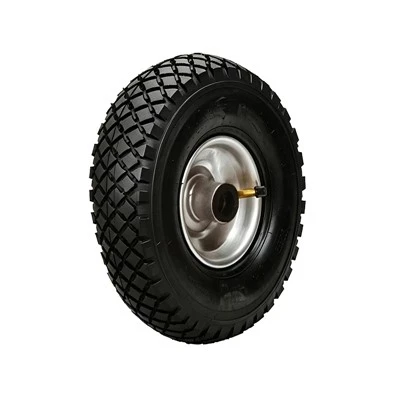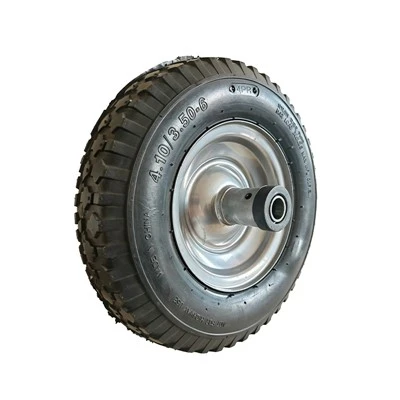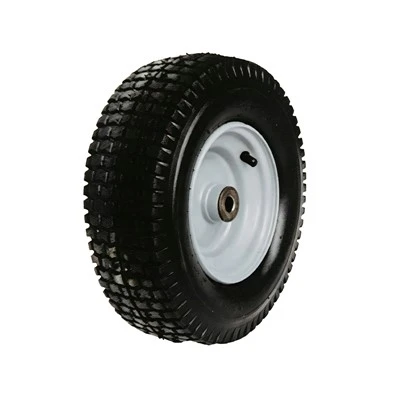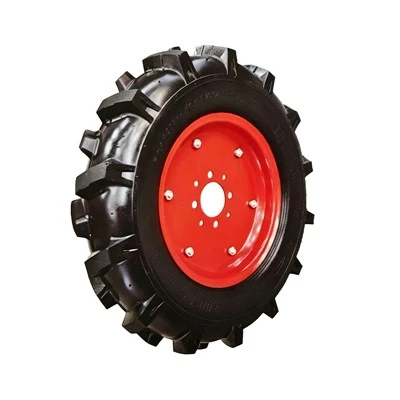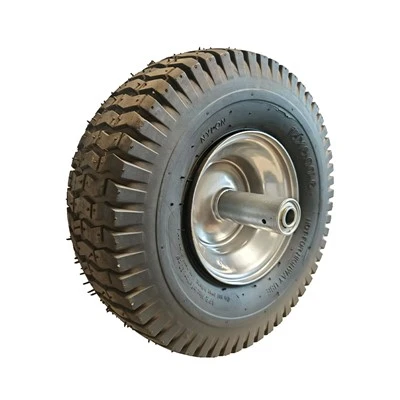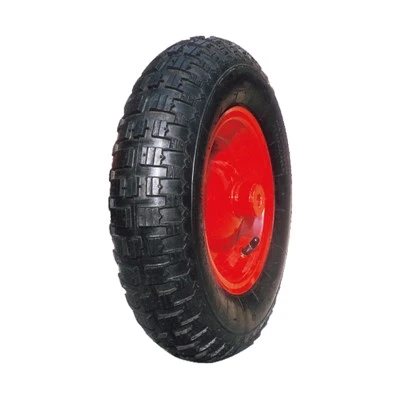

A PU foam wheel is a wheel designed with polyurethane foam as its primary tire material. PU stands for polyurethane, a versatile polymer that can be processed into a resilient cellular foam structure. A typical PU foam wheel consists of a foam tire body, wheel center, and bearing assembly. Unlike a conventional pneumatic tire, it does not depend on internal air pressure for support. Compared with many conventional solid rubber wheels, its foam construction can provide a lighter-weight solution with useful elasticity and cushioning characteristics.
From a material perspective, PU foam is a cellular polyurethane material produced through a controlled foaming process. The resulting structure contains numerous small cells that allow the material to compress when subjected to an external load. Once the load is reduced, the foam gradually recovers toward its original shape. This combination of compression and recovery gives the wheel a degree of resilience and cushioning during operation.
A PU foam wheel typically consists of three key structural elements: the foam tire body, wheel center, and bearing assembly. The polyurethane foam body is the part that contacts the floor and provides traction, cushioning, and load support. The wheel center provides the necessary structural connection between the tire and the equipment, while the bearing allows the wheel to rotate smoothly around the axle. Wheel diameter, width, wheel-center the working day. The wheels must support both the equipment and its working load while maintaining smooth and manageable movement. PU foam can deform slightly under load, providing a degree dimensions, and bearing specifications can be customized or selected according to the equipment and application requirements.
One of the main characteristics of PU foam wheels is their combination of low weight, resilience, maintenance-free operation, and useful wear resistance. In warehouses, distribution centers, and manufacturing facilities, handling equipment is often moved repeatedly throughout the working day. The wheels must support both the equipment and its working load while maintaining smooth and manageable movement. PU foam can deform slightly under load, providing a degree of cushioning without requiring the regular inflation checks associated with pneumatic tires.
PU foam wheels are suitable for a variety of indoor and selected outdoor material handling applications. They can be used where equipment designers need to balance wheel weight, mobility, cushioning, durability, and ease of maintenance. Their properties make them a practical option for hand trucks, platform carts, industrial trolleys, and other mobile equipment.
Overall, a PU foam wheel is a mobility component built around a resilient polyurethane foam tire and supported by a wheel center and bearing assembly. Its combination of lightweight construction, elastic support, cushioning, and inflation-free operation makes it a useful choice for modern material handling equipment. As industrial and logistics equipment continues to emphasize efficiency, durability, and reduced maintenance, PU foam wheels are likely to remain an important option for a wide range of applications.