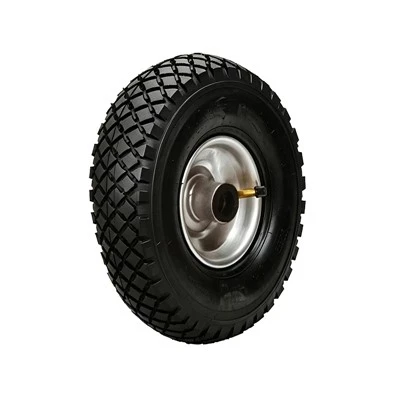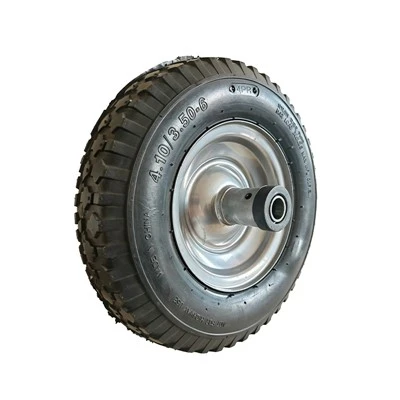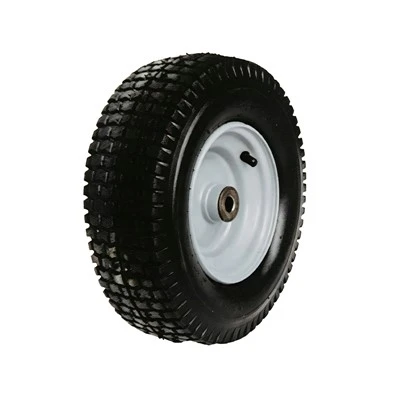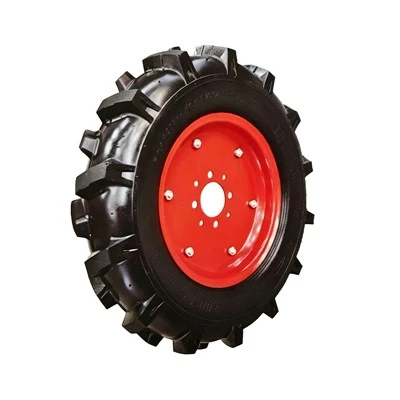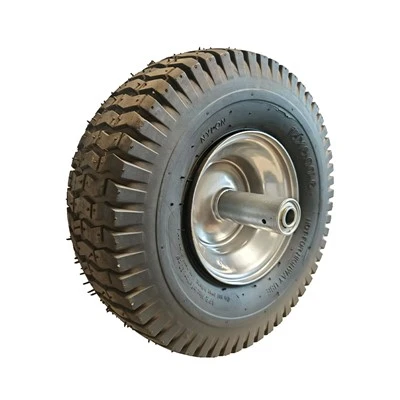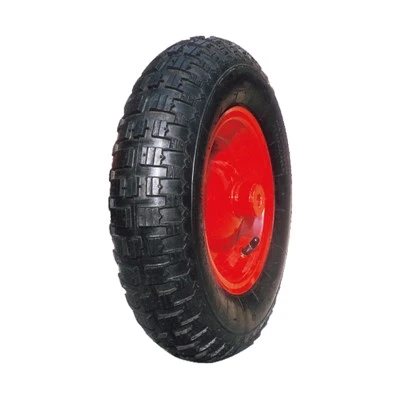

As warehousing, logistics, manufacturing, and commercial handling equipment continues to move toward lighter and lower-maintenance designs, PU foam wheels are becoming a practical choice for a wide range of mobile equipment. Their relatively low weight, resilient construction, and inflation-free operation make them suitable for many handling applications. Depending on wheel-center construction, foam density, tire design, and mounting configuration, PU foam wheels can be manufactured in different forms to meet specific requirements for load capacity, cushioning, wear resistance, and maneuverability.
PU foam wheels can be classified by their wheel-center construction, with metal-centered and composite-centered designs being common options. Metal wheel centers are typically manufactured from steel or other suitable metals and provide strong structural support for the foam tire. They are well suited to industrial carts, platform trucks, and material handling equipment that requires dependable load support. Composite wheel centers can be engineered for applications where weight reduction and structural efficiency are important considerations.
Foam density and hardness also create different performance categories. Higher-density polyurethane foam generally provides greater load support and improved resistance to repeated wear, making it suitable for equipment used frequently or under relatively high loads. Foam with a lower density or greater resilience can provide a softer ride and enhanced cushioning, which may be beneficial for applications where smooth movement is a priority.
PU foam wheels can also be differentiated by the way the foam tire is integrated with the wheel center. One-piece molded constructions provide a compact assembly and a strong connection between the tire and center, making them suitable for applications where structural integrity is important. Multi-component designs can provide greater flexibility for installation and servicing, particularly when the wheel assembly is designed to allow individual components to be inspected or replaced.
Application requirements are another way to distinguish PU foam wheel configurations. Wheels used on warehouse and logistics equipment typically place greater emphasis on wear resistance, load capacity, and rolling efficiency. Wheels intended for commercial carts and indoor mobile equipment may place more emphasis on low weight, smooth movement, and compatibility with finished floor surfaces.
Overall, PU foam wheels are not limited to a single configuration. Manufacturers can adjust foam density, hardness, wheel-center construction, wheel dimensions, and mounting design to create products for different operating conditions. The most suitable type should be selected according to equipment load, floor conditions, operating frequency, travel speed, and maintenance requirements. Proper matching of these factors can help ensure reliable wheel performance and extend service life in material handling applications.