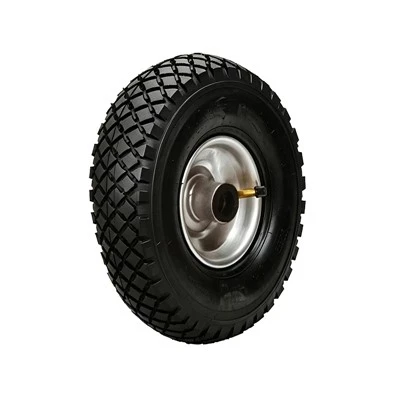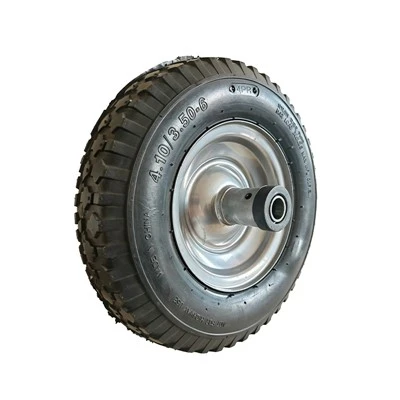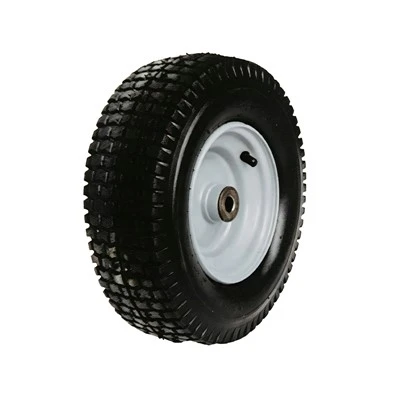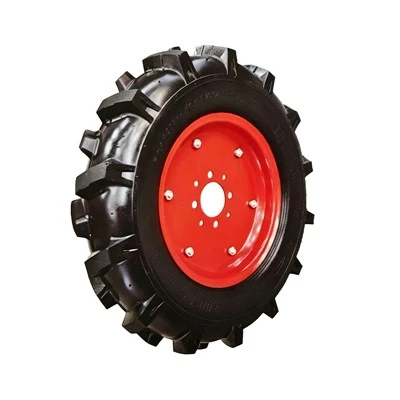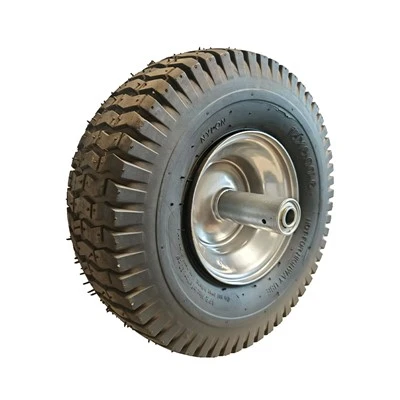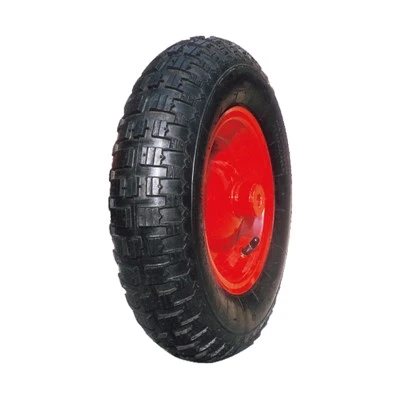

PU foam wheels use polyurethane foam as the primary tire material and are widely used on hand trucks, platform carts, industrial trolleys, logistics equipment, and other mobile handling systems. Unlike conventional pneumatic and solid rubber wheels, PU foam wheels rely on the resilient cellular structure of polyurethane foam to provide load support and cushioning. This allows them to combine relatively low weight with stable rolling performance and shock absorption.
The operating principle of a PU foam wheel is based primarily on the elastic behavior of its cellular material. When a load is applied, the wheel is compressed between the equipment and the floor. The foam contains a network of small cells that deform under pressure, allowing the applied force to be distributed throughout the wheel structure. When the load is reduced, the material gradually returns toward its original shape, providing continuous elastic support during normal operation.
As the equipment moves, the contact area between the wheel and the floor undergoes controlled deformation. When the wheel passes over floor joints, small obstacles, or minor surface irregularities, the resilient polyurethane foam can absorb part of the impact through deformation. This helps reduce the amount of vibration transferred to the equipment frame and its load, contributing to smoother movement compared with some rigid wheel designs.
Rolling behavior is another important part of the wheel's operation. As an operator pushes the equipment, the wheel rotates around its axle while the PU foam tread remains in contact with the floor. Material density, hardness, wheel diameter, and tire construction all influence rolling resistance. By optimizing these characteristics, manufacturers can achieve an appropriate balance between load capacity, maneuverability, cushioning, and ease of movement.
PU foam wheels also offer good resistance to puncture-related failures and routine inflation requirements. Because the wheel does not depend on a conventional pressurized air chamber, it does not require regular inflation and cannot lose its basic support characteristics due to a typical flat-tire problem. This makes PU foam wheels a practical option for warehouses, factories, distribution centers, and other environments where equipment is moved frequently.
Overall, PU foam wheels operate through the elastic deformation, load distribution, and recovery characteristics of polyurethane foam. Factors such as foam density, hardness, wheel diameter, tire construction, and wheel-center design all influence the final performance. Properly matching these characteristics to the application can provide an effective balance of load support, cushioning, wear resistance, and maneuverability, making PU foam wheels a reliable mobility solution for material handling equipment.