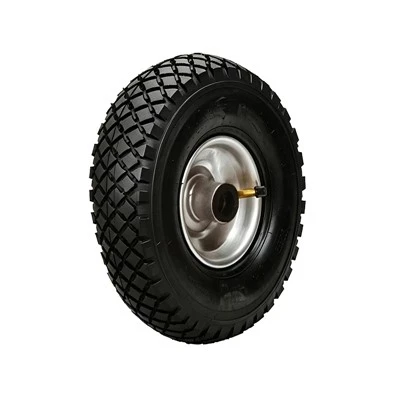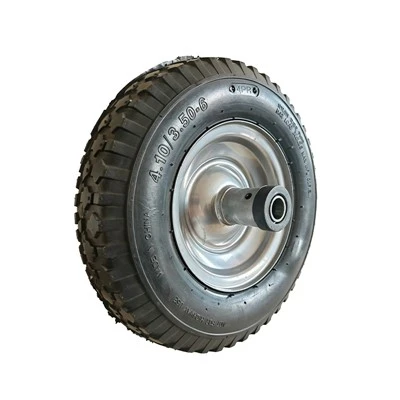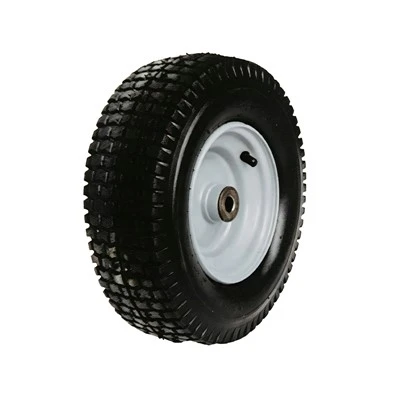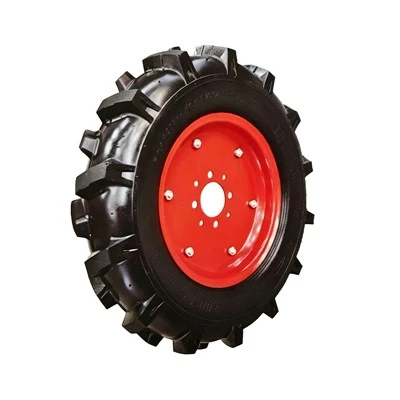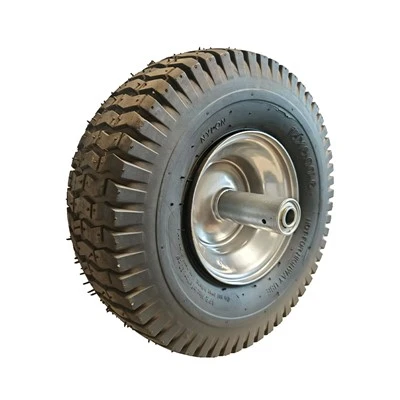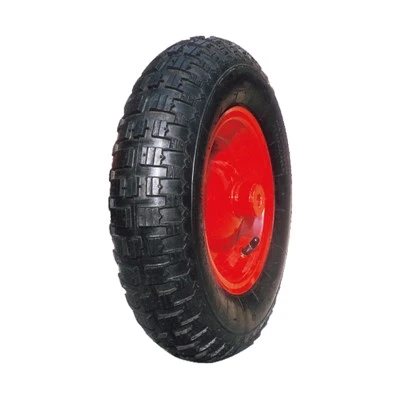

As warehouses, manufacturing facilities, and material handling operations place greater demands on wheel performance, PU foam wheel manufacturing processes continue to evolve. As a wheel product built primarily from polyurethane foam, its production involves several key stages, including material preparation, precise formulation, mixing, foaming, molding, wheel-center integration, post-curing, and quality inspection. A well-controlled manufacturing process helps maintain dimensional consistency and stable performance across different applications.
Material preparation provides the foundation for PU foam wheel production. Manufacturers select suitable polyurethane components and additives according to the required performance characteristics. Each material must be accurately measured and prepared according to the production specification. Formulation ratios can affect foam density, hardness, resilience, wear resistance, and overall mechanical performance, making precise dosing an important part of process control.
The prepared materials then move into the mixing and foaming stage. The individual components are combined at controlled ratios and thoroughly mixed before the chemical reaction creates the cellular polyurethane structure. Temperature, reaction time, mixing conditions, and material behavior can all influence the resulting cell structure. Maintaining stable process parameters helps produce a more uniform foam structure and achieve the desired balance of elasticity, load support, and durability.
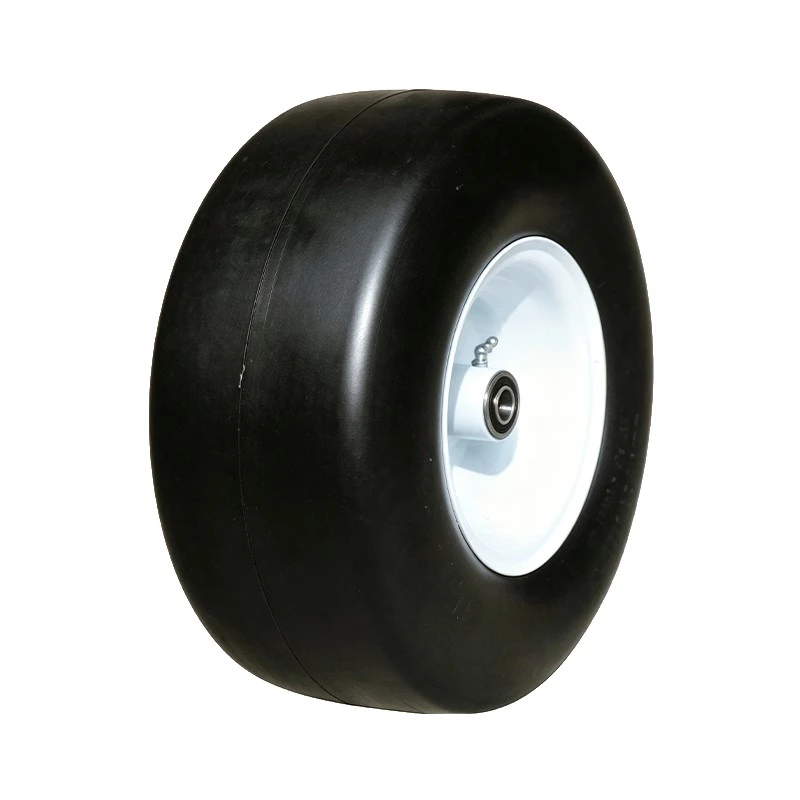
The material is then transferred to the molding stage. The reactive foam mixture is introduced into a dedicated mold that determines the wheel's diameter, width, tread profile, and overall geometry. For wheels incorporating an integrated wheel center, the center must be accurately positioned during molding so that the polyurethane forms a secure bond with the supporting structure. After molding, the wheel undergoes an appropriate curing or post-curing process to stabilize its material properties.
Finishing and quality inspection are essential parts of the manufacturing process. After demolding, each wheel can be inspected for surface appearance, dimensions, tread condition, and molding quality. Additional checks may include hardness, load performance, rotational characteristics, and the integrity of the connection between the foam tire and wheel center. For volume production, sampling and performance testing can be used to verify consistency and compliance with applicable technical requirements.
Overall, PU foam wheel manufacturing is a controlled process involving material formulation, mixing and foaming, precision molding, wheel-center integration, curing, finishing, and quality inspection. By optimizing production parameters and maintaining effective process controls, manufacturers can improve product consistency and reliability while developing PU foam wheels suited to warehousing, logistics, industrial handling, and other mobile equipment applications.