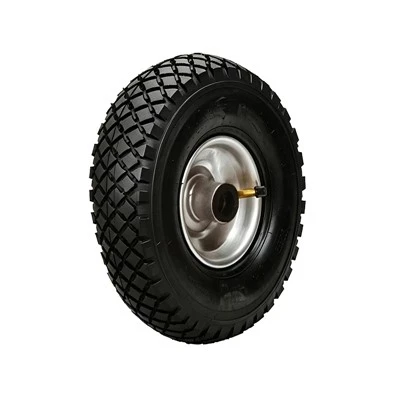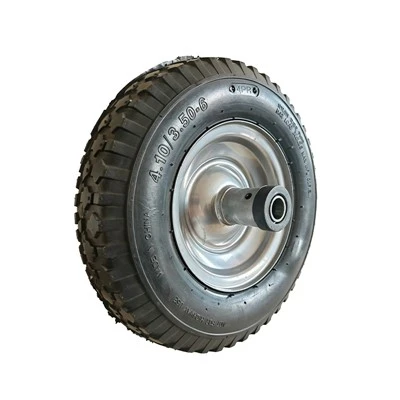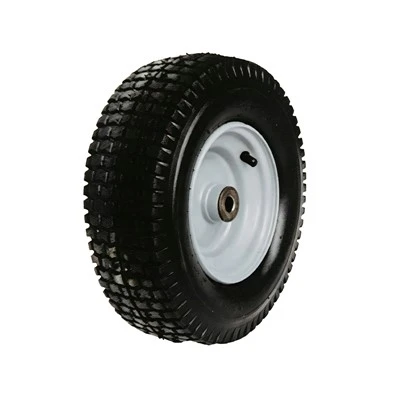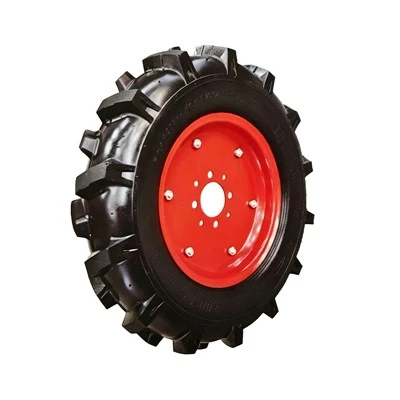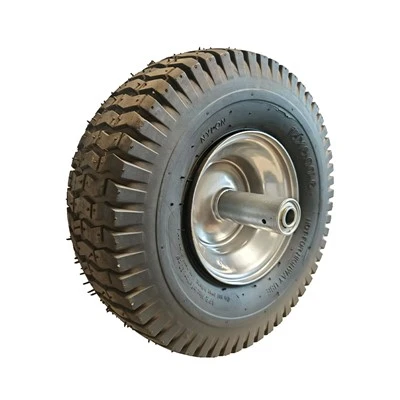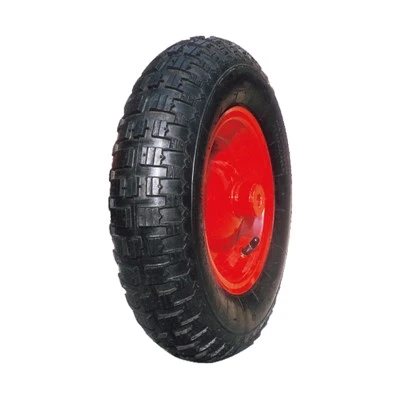

As warehouses, manufacturing facilities, and outdoor handling operations place greater emphasis on equipment reliability, wheel design and manufacturing technology have become increasingly important. Split-rim pneumatic wheels combine the cushioning characteristics of air-filled tires with the serviceability of a multi-piece rim, making them a practical option for hand trucks, platform carts, industrial trolleys, and other material handling equipment.
Split-rim construction is a key area of wheel design. Unlike a conventional one-piece wheel center, a split rim consists of multiple components that are assembled and secured using bolts or other fastening systems. The design must provide sufficient structural strength, connection reliability, and dimensional accuracy so that the rim remains stable under both working loads and operational impacts. A well-designed split rim can also make tire installation, removal, and replacement more convenient.
Proper tire-to-rim matching is equally important. Tire diameter, tire width, rim dimensions, and mounting specifications need to be compatible with one another. Incorrect sizing can affect tire stability, wheel rotation, and overall equipment performance. During product development, manufacturers need to consider the equipment's rated load, operating environment, expected ground conditions, and mobility requirements when determining the appropriate tire and rim configuration.
Load capacity and shock absorption are important technical considerations for pneumatic wheels. The air-filled tire provides flexible support and can absorb part of the impact generated when the wheel travels over uneven surfaces. Tire compound, tread design, and inflation pressure can all influence load support, cushioning, and rolling performance. For industrial material handling applications, these factors need to be carefully balanced to achieve reliable performance without unnecessarily increasing rolling resistance.
Bearing performance and air retention also contribute to overall reliability. Bearings should provide smooth rotation and sufficient load capacity, while the tire and rim assembly must maintain reliable air retention during operation. Manufacturing and quality control processes should include inspections of rim dimensions, fastening components, tire condition, bearing installation, and overall assembly quality.
Modern manufacturing processes can further improve consistency by applying controlled forming, machining, assembly, and inspection procedures. Accurate component dimensions and reliable fastening are particularly important for split-rim designs because the individual rim sections must work together as a stable wheel assembly.
Overall, split-rim pneumatic wheel technology involves structural design, material selection, tire and rim compatibility, load capacity, air retention, bearing configuration, manufacturing precision, and quality control. Continued development in these areas can help manufacturers provide wheels with improved durability, serviceability, and operating stability for modern material handling equipment.