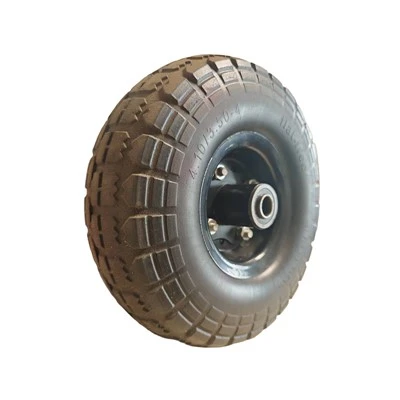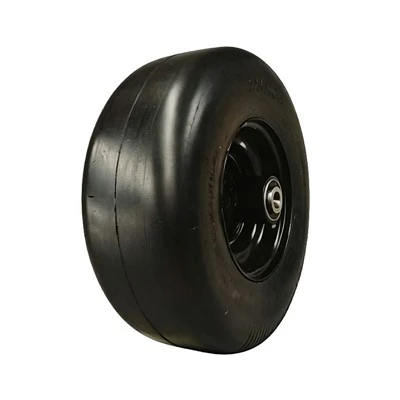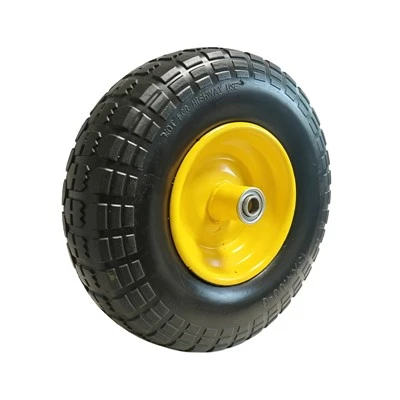


Hey there, it’s Jake from the wheel team at [your company name] – today I’m talking about something I get asked all the time: flat spots on 5.00-6 solid rubber wheels. If you’re using these for carts, generators, yard equipment, or even small mobility scooters, you know how annoying (and costly) those hard, permanent dents are. I’ve been supplying 5.00-6 solid rubber wheels for years, and I’ve seen every mistake that leads to flat spots – so let’s break down the science and the fix, no boring jargon promise.
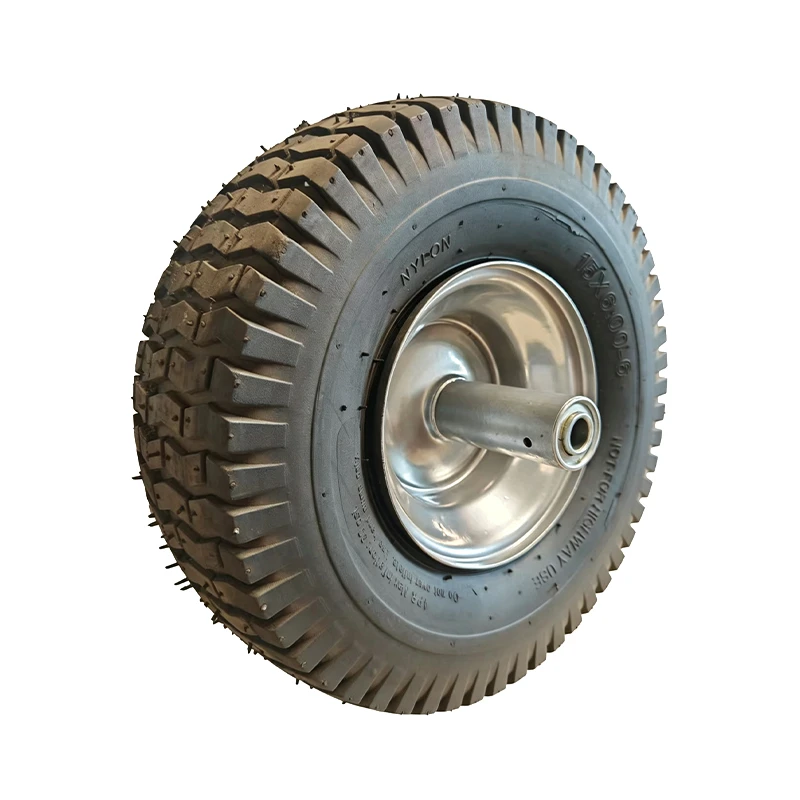
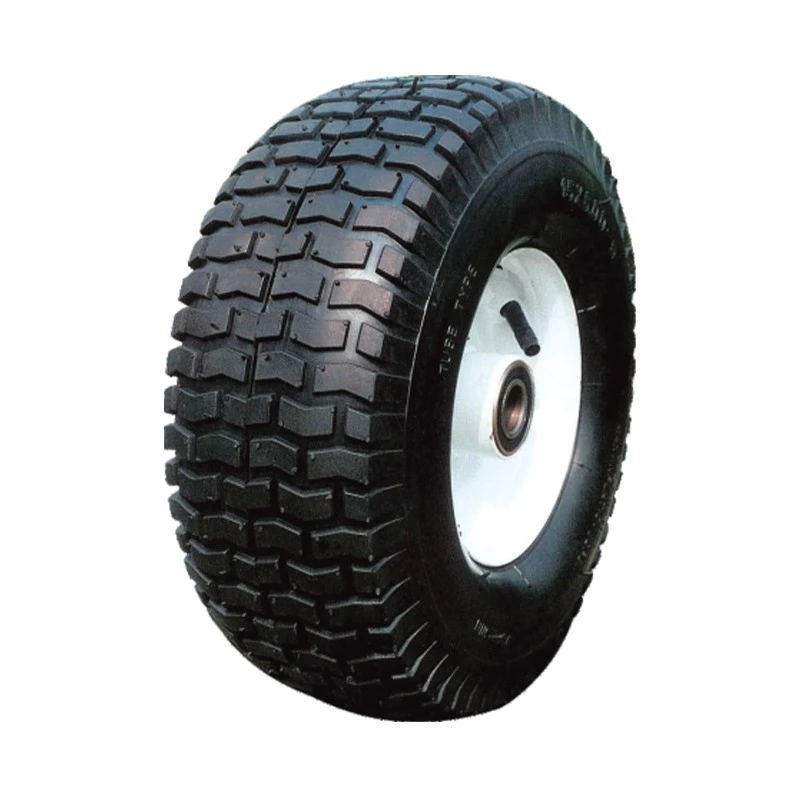
First, let’s get one thing straight: solid rubber wheels don’t have air like pneumatic ones (you can check our 4.00-10 Pneumatic Wheel if you’re into that different style) so flat spots here aren’t from a puncture. They’re from the rubber compound permanently deforming under constant pressure, usually when the wheel’s been sitting in one spot for too long, or loaded unevenly, or even overloaded beyond what it’s built for. That’s the key – solid rubber is durable, but it’s not indestructible, so small tweaks go a long way.
Let’s start with the big one most people miss: load management. 5.00-6 solid rubber wheels have a specific weight capacity – I see customers cramming way too much on a single wheel because they think “solid means tough.” Nope, each wheel’s rated for a max load, usually around 300-400 lbs for standard 5.00-6 units. If you overload it, the rubber gets squished down in the contact patch with the ground, and if it stays that way for hours or days, the rubber molecules can’t snap back. Think of it like leaving a can of soda crushed under a heavy box – it doesn’t pop back to normal. Another quick note: if you’re running dual wheels, make sure weight is split evenly between both. Uneven loading on one wheel is a fast track to flat spots, way faster than overloading a evenly weighted one. I always tell clients to spread heavy loads across multiple wheels, not pile all the heft on one.
Next up: storage habits. This is where I’ve seen the most flat spots pop up on wheels that haven’t been used in weeks or months. If you’re storing equipment with 5.00-6 solid rubber wheels, don’t just park it on the ground and walk away. For starters, never leave it sitting in direct sunlight or extreme cold for long. Rubber hates temp swings – hot sun makes it soft and prone to deformation, cold makes it brittle and more likely to hold a dent. If you have to store it outdoors, use a weatherproof cover, and for extra care, prop the equipment up so the wheels aren’t bearing any weight. Even better? Rotate the wheels every week or two if you can, so the load shifts around. A pro tip I picked up from a warehouse client: some swap out their main equipment wheels for our 5.00-6 PU Foam Wheel temporarily during long storage stints. PU foam is more resistant to permanent deformation than standard solid rubber, so that extra buffer helps if you can’t prop things up. We also have larger sizes if you need options, like the 6.00-6 Solid Rubber Wheel for similar use cases if your gear needs a bit more width.
Tire pressure (wait, solid rubber has… pressure? Sort of). Unlike pneumatic wheels with actual air pressure, solid rubber wheels have a “load pressure” – meaning how much force is pressing down on the rubber relative to its size and hardness. Harder rubber compounds (the ones built for heavy loads) are less likely to form flat spots, but they also ride rougher. So if you’re using a 5.00-6 wheel that’s too hard for your application, the contact patch is smaller, so all the weight is concentrated in a tiny area. That’s a recipe for a flat spot when stationary. Conversely, too-soft rubber will deform way easier, especially under constant load. The sweet spot is matching the rubber hardness to your typical use: if it’s daily use moving light loads, a softer rubber is fine, but for stationary equipment that’s left in one spot, go for a medium or hard compound. Another quick fix here: if you have a wheel that’s already got a small flat spot, rolling it lightly back and forth (not spinning it fast!) can sometimes loosen the rubber molecules and get it to pop back a little – but only minor ones, don’t expect miracles.
Maintenance checks, I know, I know – no one loves them, but they’re easy. Every couple of weeks, take a second to look at your 5.00-6 solid rubber wheels. Check for any cuts, tears, or uneven wear – those weak spots can make deformation worse. Also, make sure the wheel is mounted correctly on the axle – if the wheel is tilted or misaligned, the pressure isn’t spread evenly, so one side is getting squished way more than the other. A misaligned wheel is 2x more likely to get a flat spot than a perfectly aligned one, I swear by that. Lubricate the axle occasionally too – a stiff, stuck wheel doesn’t roll as smoothly, so it’s just sitting in the same spot longer, wearing on that contact patch.
Wait, what about when you’re actually using the wheel? Don’t let it sit stationary for hours at a time if you can help it. If you’re using a cart to haul parts around a shop, don’t park it in the same spot for 8 hours straight – roll it a few feet every couple of hours to shift the pressure. For yard equipment that’s parked between uses, same rule. And if you’re going to store it for more than a week, definitely prop it up. I’ve had a customer call me once panicking because their new generator’s 5.00-6 wheels had a flat spot after sitting in their garage over winter – we had them use a couple of jack stands to lift it, and that’s never happened again. They even switched some of their other gear to the 6.00-6 PU Foam Wheel for extra peace of mind during long storage.
Also, be careful with surfaces. If you’re running your 5.00-6 solid rubber wheels on rough, uneven ground, the contact patch changes constantly, but if you’re parking on a concrete floor that’s slightly uneven or has a tiny indentation, that’s where a flat spot can form fast. Same with gravel – if you leave a cart on gravel overnight, the wheel sinks a little into the small pebbles, concentrating pressure in one spot. Try to park on a flat, solid surface when possible, and if you have to park on soft ground, put a plywood or metal sheet under the wheels to distribute the weight.
Let’s talk about common mistakes I see clients making all the time: First, assuming solid rubber wheels can take the same abuse as pneumatic ones. They’re tough, but not unbreakable – the 5.00-6 solid rubber wheel is built for loads up to a certain point, not for hauling 1,000 lbs. Second, leaving equipment parked in the sun all summer – I’ve seen rubber get so soft it forms a flat spot in just 3 days. Third, not rotating wheels when using dual-wheel setups – each wheel is bearing weight differently, so swapping their positions every month evens out wear. And if you are in the market for different wheel types to avoid these issues, we also have the 6.50-8 PU Foam Wheel for heavier applications if you need something a bit bigger, all built with deformation resistance in mind.
Now, if you do end up with a small flat spot, don’t throw the wheel away yet (we all hate waste). For minor ones, rolling the wheel back and forth gently on a flat surface for 5-10 minutes can help the rubber reshape. For more stubborn ones, you can use a heat gun (set to low, don’t overheat the rubber!) to warm the flat spot a little, then roll it while it’s warm to encourage it to pop back. Just be careful not to burn the rubber – that’ll weaken it even more. But if the flat spot is big, or the rubber is cracked or worn, it’s time to replace it. Investing a few bucks in a new wheel is way cheaper than replacing the whole piece of equipment.
At the end of the day, preventing flat spots on 5.00-6 solid rubber wheels is all about being intentional with load, storage, and use. Small, easy steps add up to way longer wheel life and fewer headaches. If you’re shopping for new wheels, whether it’s our standard 5.00-6 solid rubber, the 5.00-6 PU Foam Wheel for extra deformation resistance, or any of our other sizes, feel free to reach out – we’re happy to help you pick the right wheel for your specific needs, no pushy sales stuff, just real advice from someone who’s been in the wheel game for years. We can talk through your load requirements, storage situation, and any other details to make sure you don’t end up with those annoying flat spots.
Before I wrap this up, a quick note: these tips apply to solid rubber wheels across most sizes, from the 5.00-6 we’re talking about to larger units, but always double-check your wheel’s specific load rating – that’s the most important number you have. Don’t guess, check the label or reach out to us, we can walk you through it. And if you have any horror stories about flat spots on your wheels, hit us up – I’d love to hear them, and help you fix whatever’s going on.
References:
- Rubber Wheel Technology: Durability and Deformation Characteristics (Industrial Tire & Wheel Association, 2022)
- Best Practices for Stationary Equipment Storage with Solid Rubber Tires (Warehouse Equipment Maintenance Journal, 2021)
- Load Rating Standards for Light-Duty Solid Rubber Wheels (National Tire and Rim Association, 2023)